I’ve been trying to pinpoint the exact moment I realised I was ‘into’ things other people just weren’t.
I think it might have started when I was about eight or nine years old, living in Scotland, just on the outskirts of Aberdeen.
Two obscure fascinations spring to mind, and I believe they marked the beginning of a lifelong love affair with the strange and unusual.
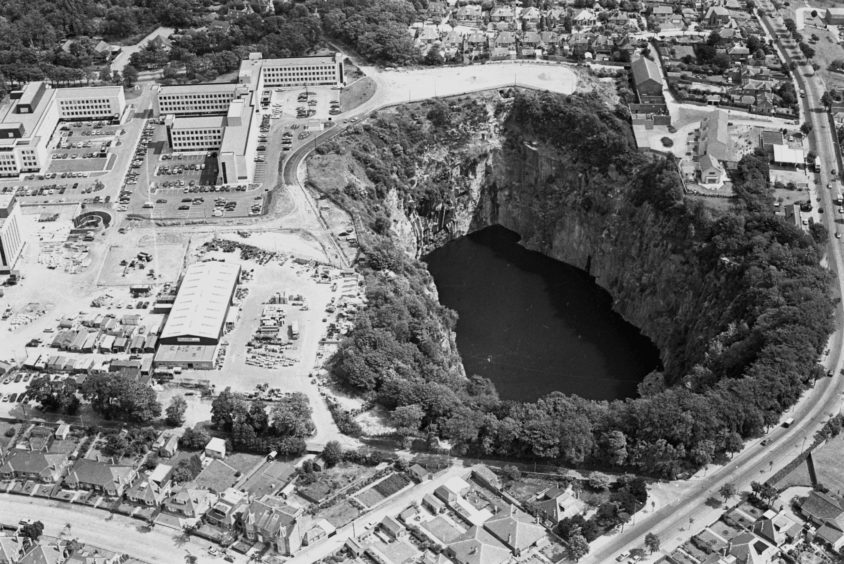
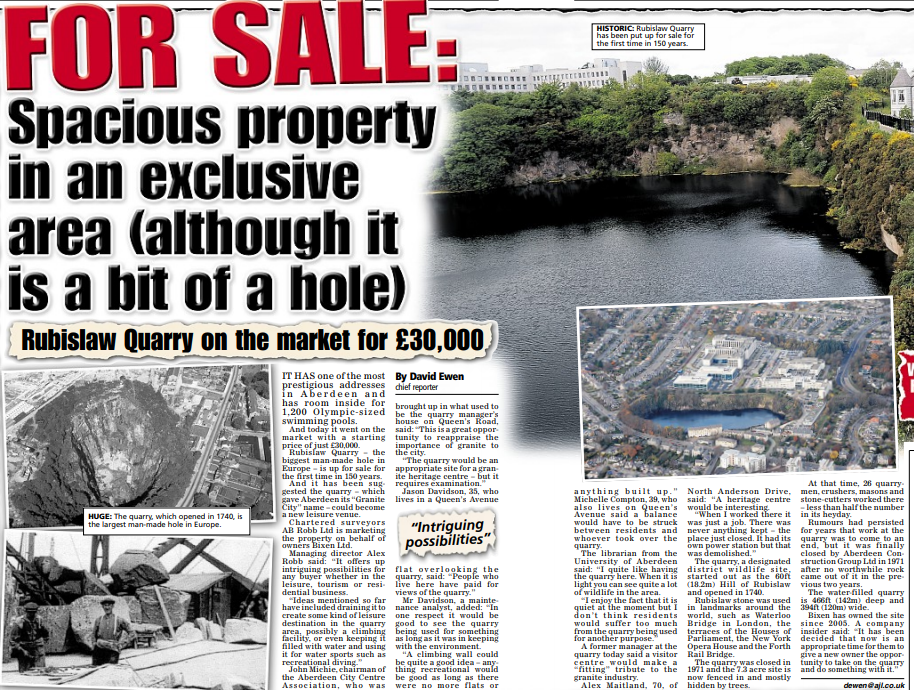
The first: an abandoned quarry in the west end of Aberdeen, not far from where we lived.
For full disclosure, I’d never actually been there. It had been sealed off and forgotten for the better part of fifty years. But I knew it existed. And I was completely fascinated by its presence. By the very idea of a vast, silent void of nothingness carved into the earth, hidden in plain sight.
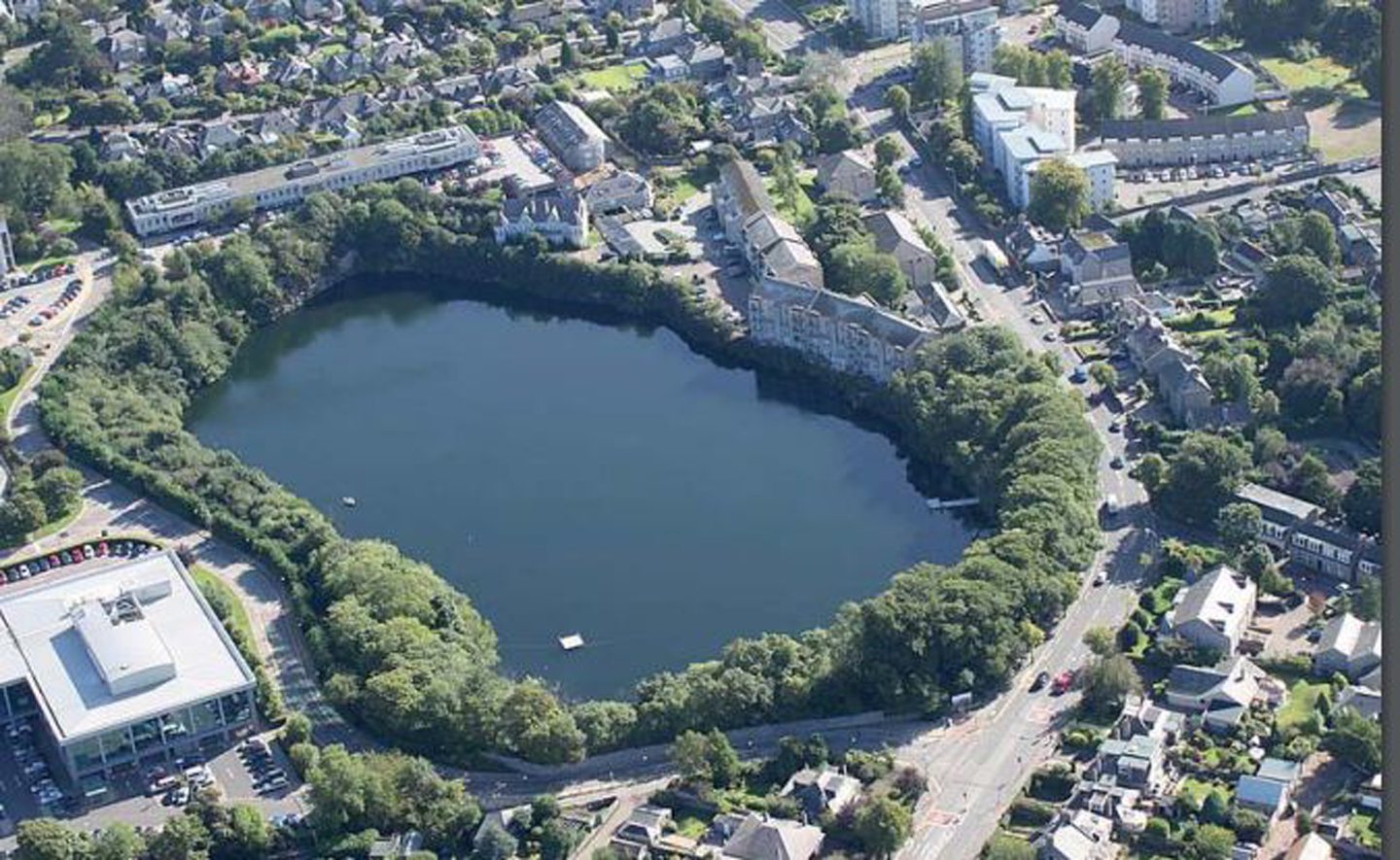
Having closed in 1971 Rubislaw Quarry faded from public consciousness as mother nature began to take back what was hers, slowly filling its vast empty belly, further concealing it from the outside world.
Every now and then, a local newspaper would publish a story about one group or another proposing ambitious plans to repurpose its expansive, water-filled depths.
But it was the accompanying photographs that drew me in. Blurry printed lines on the newsprint, barely legible, yet somehow magnetic. I’d stare at them, trying to make out the details, my young mind asking: “What’s actually in there?” The usual response of “nothing” from a family member just wasn’t cutting it.
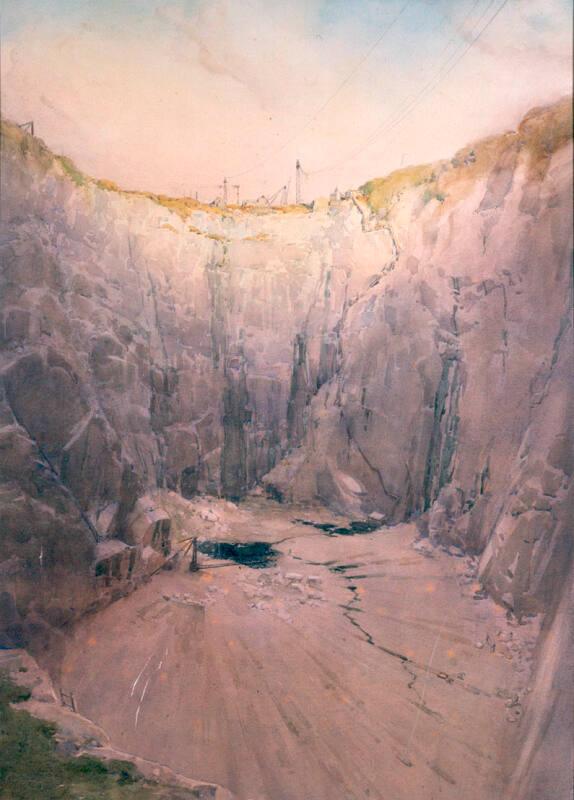
At almost 500 feet deep, Rubislaw Quarry is one of the largest man-made holes in Europe. With an operating history of nearly 200 years, and over six million tonnes of rock extracted from its depths, it shaped Aberdeen’s identity as the ‘Granite City’.
And yet, its memory hides in plain sight. Its sparkling matter paving the streets of the city and whispering from the walls. Even echoing through Waterloo Bridge and the Houses of Parliament. Places that have long since forgotten where their bones came from, and yet its memory quietly weaves through their foundations.
My grandmother, no doubt weary of my constant questions about “The Hole” (as we affectionately called it, since I could never remember its actual name), used to save the newspaper clippings for me. It was always a good day when she’d present me with an envelope of articles she’d cut out and kept since I last saw her.
Left to fill with rainwater for decades, today it lives on as a man-made lake. But there’s something unsettling knowing there’s nearly 500 feet of nothingness beneath you. Not the kind of nothingness you find in the ocean, where the water flows freely and you’re welcomed as a guest in nature’s home.
Sometimes I imagine what might be down there. Not just the quiet vibrations of time, but things. Forgotten things. The kind that gather when no one’s watching.
I think of when they drain the canals in London to clean them. You expect mystery, something cinematic, and instead you get the mundane. Rusted garden furniture. Shopping trolleys. Bent signage. The occasional safe. Ordinary objects, transformed into relics simply by being submerged long enough.
And then there are the things no one wants to mention. The ones that don’t belong to anyone anymore. It’s strange how, when someone goes missing, the search always turns to water. Lakes. Reservoirs. Quarries. As if we know, instinctively, that water holds secrets better than soil.
But what if no one knew you were missing? What if you slipped through the cracks quietly, without anyone noticing? Would anyone even think to look?
I haven’t lived in Aberdeen for over twenty years, nor had I thought about ‘The Hole’ in quite some time before writing this. A place which once consumed my childhood thoughts. A place stripped of her jewels, hollowed and drowned in silence. But she’s still there. Still remembering. Still watching.



 House of Solitude
Leave a comment