

️Roll back to 2024, and I was at Develop:Brighton, the UK’s leading conference for the game development industry.
For three days each year, the DoubleTree Hilton in Brighton transforms into a living tidepool of creators, storytellers, designers, and tech innovators, all committed to the world of videogames. It’s a place where ideas surface, collide, and leave you wanting more.
While scanning the program, one talk stopped me in my tracks. It promised:
“Reflections on crafting horror that feels distinctly British—rooted in isolation, industrial melancholy, and emotional realism.”
I was sold.
At the time, I hadn’t yet played Still Wakes the Deep. But after hearing Laura Dodds (Associate Art Director), Daan Hendricks (Audio Director), and Louis Larsson-De Wet (Project Technical Director) unpack their aptly titled session, “A Very British Horror Story: The Making of Still Wakes the Deep”, I left the room utterly compelled. Their discussion of atmosphere, authenticity, and what they called “auric unknowns” lingered with me.
I went straight home and downloaded it.
Sound & Setting
Still Wakes the Deep is set aboard the Beira D oil rig. No spoilers here – the rig takes pride of place in the game’s key art (and it’s certainly not a misdirect to the latest Star Wars installment)!

The first thing that hit me was the sound design. It’s nothing short of a masterclass in immersive horror. From the howling intensity of the wind on deck to the rig itself groaning beneath your feet, every creak and shudder feels alive.
The gameplay trailer captures the audio beautifully. Normally you’d be right to assume they’d just packed all the best bits of the game in for the trailer, but the entire game lives up to these standards throughout.
The rig’s metal carcass strains under its own weight, battling both the elements and something far more unknowable lurking in the depths of the North Sea. You don’t just hear the environment—you feel it. And although I’ve never set foot on an oil rig (and after playing this, I can say with confidence I have absolutely no desire to), the game makes you believe you have.

The sound doesn’t just support the horror and isolation. It is the horror and isolation.
Curious, I wondered if they’d actually recorded on location. I won’t give too much away, but there’s a great interview on how the team built the game’s haunting audio landscape on ‘A Sound Effect’ here:
Art Direction: Industrial Beauty Meets Existential Dread
The visual design of Still Wakes the Deep is on par with its audio. The Chinese Room’s team described their aesthetic as:
“If Stanley Kubrick lost his mind shooting a documentary aboard an oil rig.”
That’s not far off. The rig is rendered with obsessive detail: oil-stained walls, waterlogged stairwells, and machinery that looks like it’s been working too long without rest. It’s beautiful in a bleak, utilitarian way. Everything you’d expect to find in the House of Solitude.
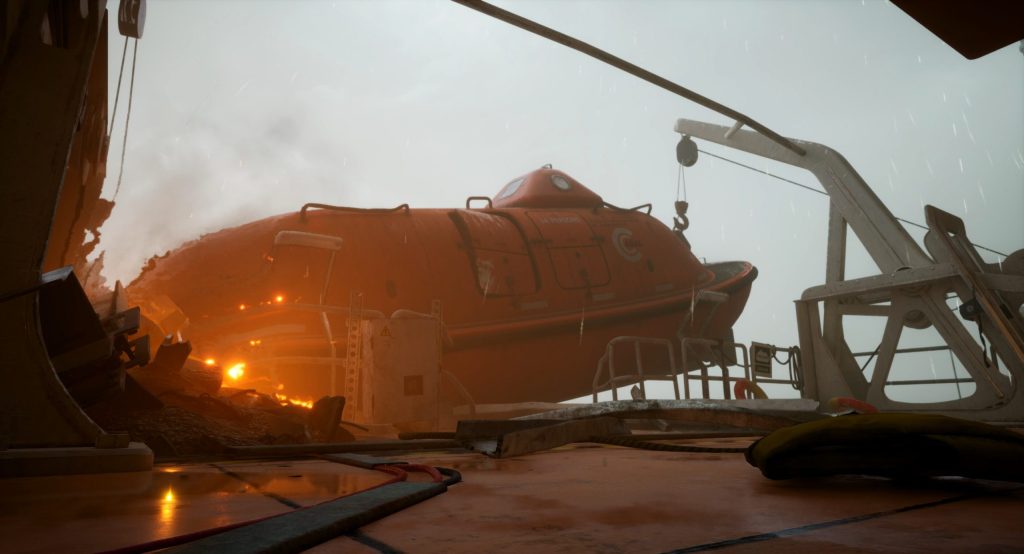
But it’s not just about realism, it’s about mood. The lighting shifts from harsh fluorescents to eerie emergency reds. Spaces feel increasingly unstable and surreal as the horror unfolds.
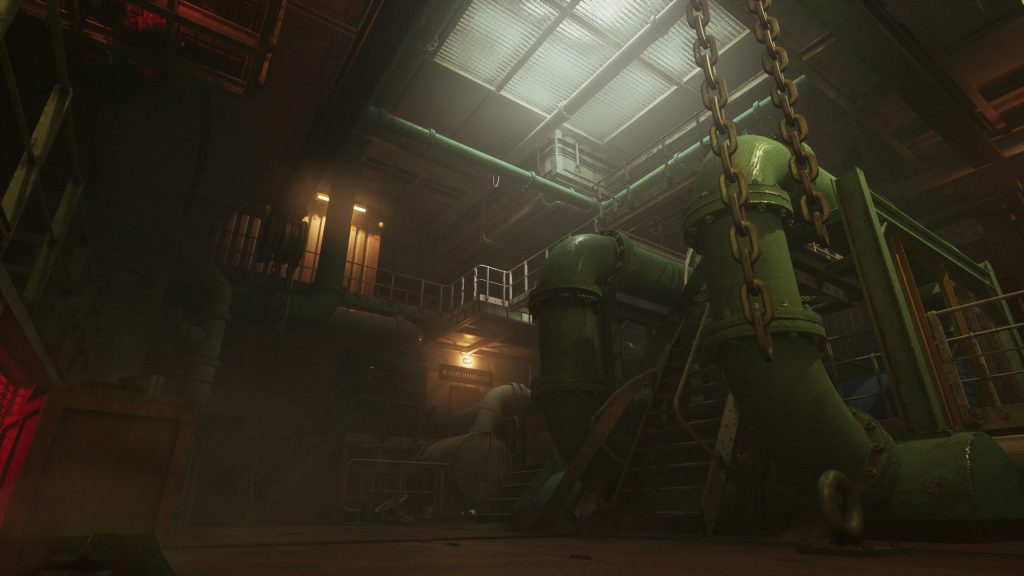
Yellow as a Visual Guide
The game uses yellow paint, tape, and lighting to subtly guide the player through the rig. It’s an exceptionally clever choice. Never intrusive, but always present. In a setting where everything is rusted, wet, or dimly lit, yellow becomes a lifeline.
Furthermore, as someone with very little to no sense of direction, I found this invaluable. It prevents the player from getting lost, or worse, breaking immersion by having to Google how to get out!
Story & Character
No (decent) game would be complete without a compelling narrative, and Still Wakes the Deep doesn’t disappoint. You play as Caz. An ordinary man with no weapons or powers.
This isn’t a game about combat or inventory management – it’s about surviving, navigating, and enduring. In a gaming landscape saturated with combat and fast-paced multiplayers, Still Wakes the Deep is a welcome change.
The horror comes from Caz’s human vulnerability, and the game leans into subtle environmental cues to guide and unsettle the player as you learn his story. Gameplay revolves around navigating him (you) through collapsing environments and avoiding unseen threats through stealth and timing.
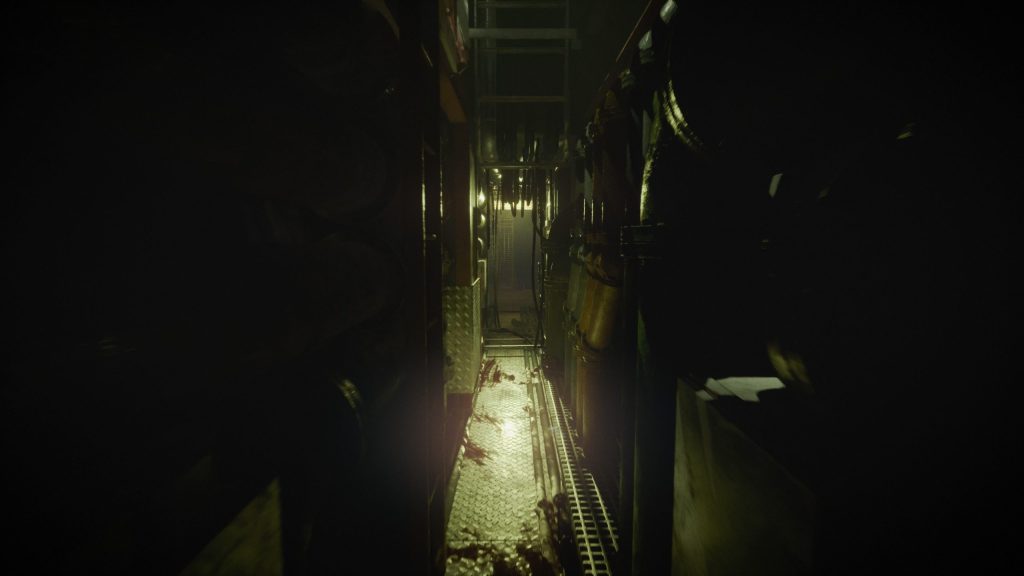
You’re surrounded by water, but there’s nowhere to go. The corridors are narrow, and exits are blocked. You’re not fighting monsters, you’re surviving them. And that makes every moment feel even more earned.
Gameplay: Minimalism with Purpose
The gameplay is deliberately minimal. No open world, no multiplayer, no combat system – just focused, linear storytelling that allows atmosphere to take centre stage.
Many doors can be opened, but not re-entered once you pass through. It’s a subtle psychological trick: you’re not just exploring, you’re being drawn deeper into the rig. Between this and the yellow guidance, the gameplay becomes foolproof and immersive. You’re pulled forward, whether you want to be or not.
Final Thoughts
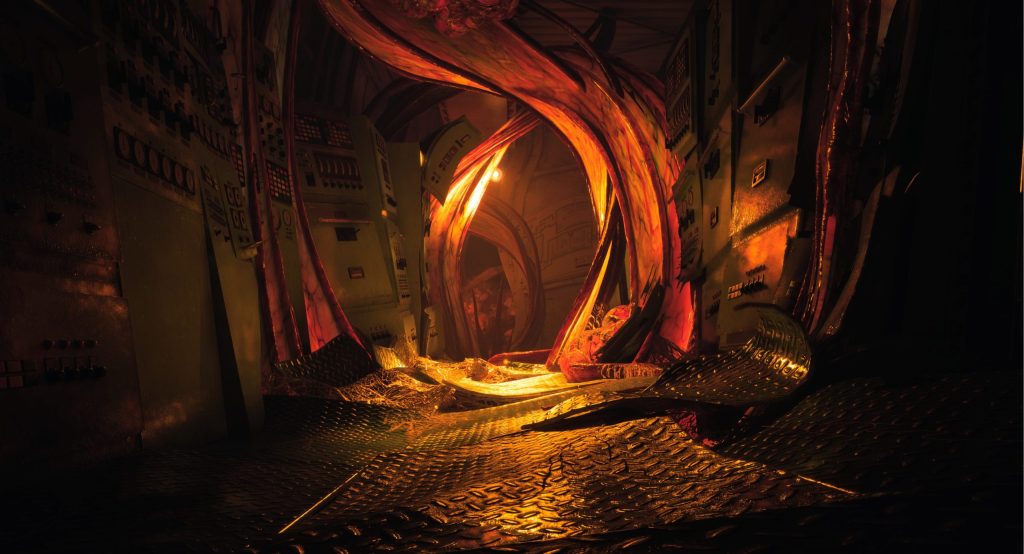
Still Wakes the Deep doesn’t rely on spectacle. It’s quiet horror. British horror. The kind that seeps in slowly and stays with you. It’s about immersive sound, rich storytelling, pacing, mood, and the things we bury, both in the sea and in ourselves.
So yes, Still Wakes the Deep gets a full five stars from me. Not for flashy effects or over-the-top action or spectacle, but for atmosphere, restraint, and emotional weight. It’s a game that doesn’t just ask you to play. It asks you to listen, to feel, and to keep moving forward, even when everything around you is falling apart.






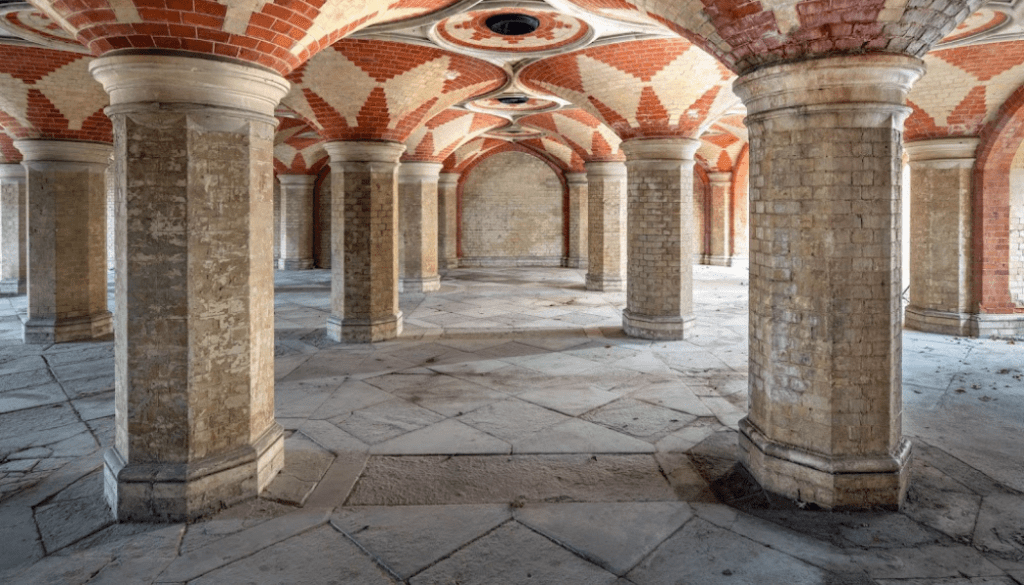
 House of Solitude
Leave a comment