
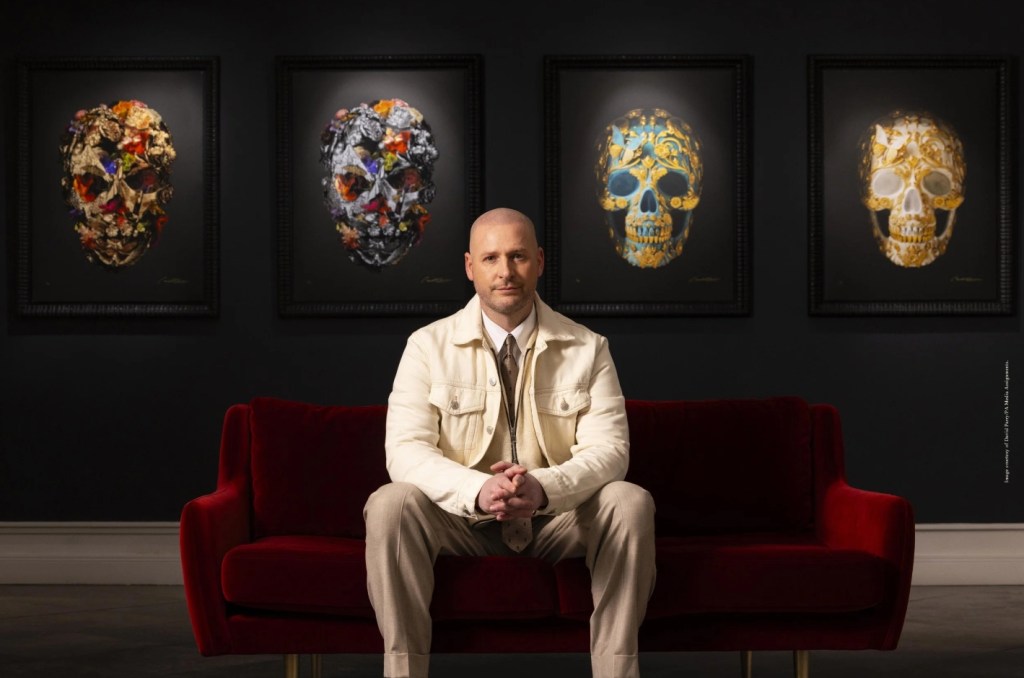
Whilst meandering the streets of London’s West-End, I found myself walking past Castle Fine Art. Just steps from the bustle of Selfridges something caught my eye through the glass of the small art gallery. It was a chance encounter. Half-shrouded in shadow from the afternoon sun hung a print of a skull, covered in gold flowers. I hadn’t planned to stop and go in. But I did. I had to.
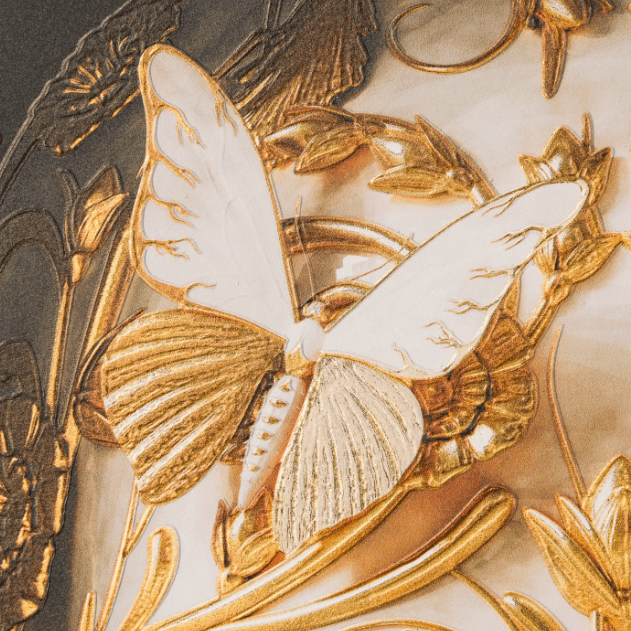
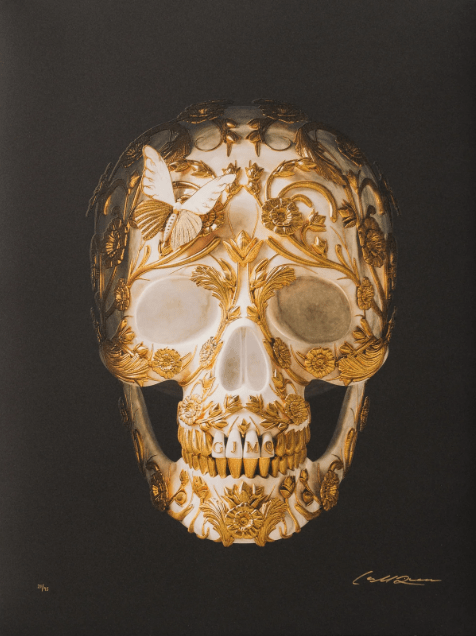
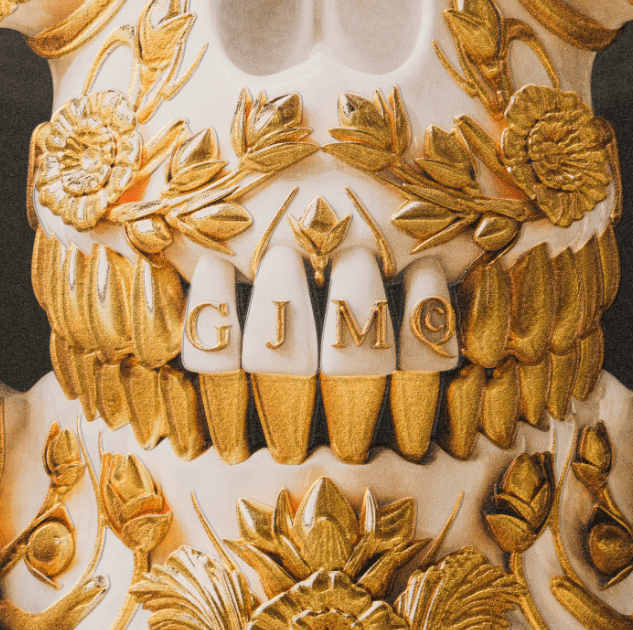


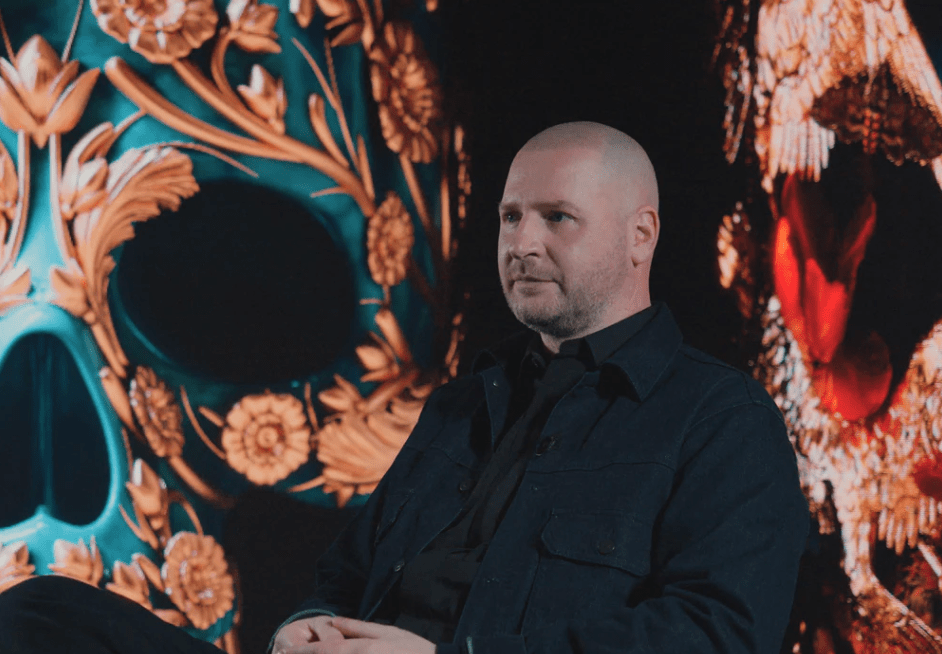
As the sales assistant explained, the piece which caught my attention was Midas – Ivory, one of four colour variations, and part of a collection aptly titled ‘Gilded Skull’.
“Gilded Skull I sees 3D sculptor Gary James McQueen translate one of his most recognisable images, alongside an extraordinary new design, into a silkscreen collection for the first time”.
Inside, the gallery had a copy of Metro on the desk, open to an article about McQueen’s immersive exhibition Form & Flora at W1 Curates – just down the road at Flannels on Oxford Street. As it turned out, this was the final day of the show. The timing felt poetic. Like I’d stumbled into the last breath of something rare.
“Exquisitely blending fine art and digital design, Gary James McQueen captivates viewers by illuminating the beauty in the mystical, macabre and romantic”.
A Legacy Reimagined
Gary James McQueen is no stranger to legacy. As the nephew of Alexander McQueen and former head of textiles at the fashion house, his work carries echoes of the macabre beauty that defined a generation of couture. But Gary’s art is not derivative, it’s a resurrection. A digital reimagining of themes like mortality, transformation, and emotional realism.
Midas Ivory is part of a broader body of work that explores the Vanitas tradition. Art that meditates on the fleeting nature of life and the inevitability of death. Where classical Vanitas paintings used oil and canvas, McQueen uses lenticular printing, digital sculpting, and in the instance of Midas Ivory, screen printing techniques detailed with gold foil. His skulls shimmer, shift, and breathe as you move around them. They’re not static. They’re alive.
“The beauty and the brutal, the macabre and the romantic, life and death – is at the core of my practice.” – Gary James McQueen
My Lenticular Fatigue
Full disclosure: I used to work in the print industry for film and entertainment companies. There was a period when lenticulars were everywhere. On packaging, store displays, promotional posters. Every studio wanted them. Every day brought a new client brief: “We saw this amazing moving image another brand did- we want to replicate it.” I lived through that phase, and I’m still recovering.
I have a love-hate relationship with lenticulars now. They’re clever, sure, but often feel like gimmicks. I’ve seen too many used for spectacle over substance. Poorly performing theatrical releases given a second shot at stardom by overspending on packaging to make titles look more appealing on shelf.
So when I realised McQueen’s broader body of work includes lenticulars, I hesitated. If Midas Ivory had been one, I might have walked away. But it wasn’t. It was still. Deliberate. Quietly powerful. If it weren’t for my lenticular fatigue, I’d have wanted the whole collection in my house.
The Emotional Pull
What struck me most wasn’t just the technique, it was the emotional resonance. The Midas collection doesn’t scream. It invites reflection. The palette softens the harshness of the skull, while the gold evokes both decay and divinity. It’s a paradox: beautiful and unsettling, intimate and universal.
McQueen’s storytelling runs deep. He’s spoken about watching horror films with his uncle, how those moments sparked his imagination and helped him build emotional worlds. That influence is clear, not in the grotesque, but in the atmosphere. His skulls don’t just sit on the wall. They breathe.
Beyond the Gallery
McQueen’s work continues to evolve. Collections like The Kintsugi Collection and Gilded Skull I push boundaries in how we experience art. He’s not just creating images, he’s crafting emotional environments. With the help of Castle Fine Art and W1 Curates, his pieces are reaching public spaces in ways that feel immersive and alive.
I didn’t go looking for Midas Ivory. It found me. And in that moment, surrounded by gold foil and silence, I remembered why art matters. Not because it moves, but because it moves you.



 House of Solitude
Leave a comment