

To be perfectly honest, I hardly even know where to start with this one.
In my procrastination to avoid committing 80+ hours of my life to Death Stranding 2, I accidentally stumbled into a 4-hour existential crisis.
It all started when I was looking for something ‘short’ to play. Something that wouldn’t ask me to deliver packages across a post-apocalyptic landscape for days on end. Something that wouldn’t result in me spending every waking moment thinking about building bridges and where I left my ladder.
Enter Indika.
With minimal expectations and knowing nothing other than “It’s about a nun who’s on a bit of a journey and has the Devil chatting to her on her shoulder” (or so went the sales pitch from a work colleague). It was enough to engage my interest. It’s also currently free on PlayStation Plus, so other than four or five hours of my life, there wasn’t much to lose.
A Nun, a Demon, and a Road Trip
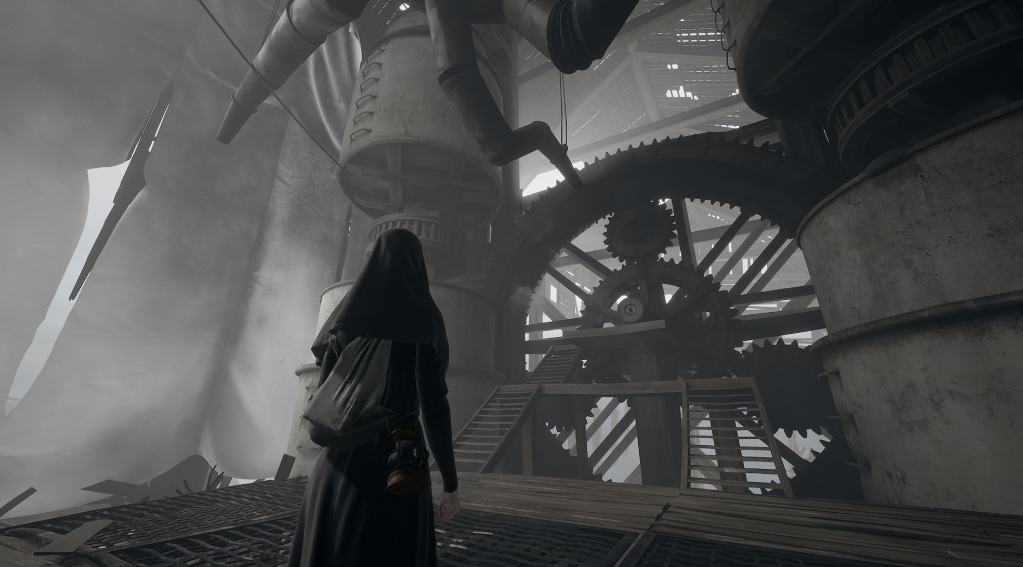
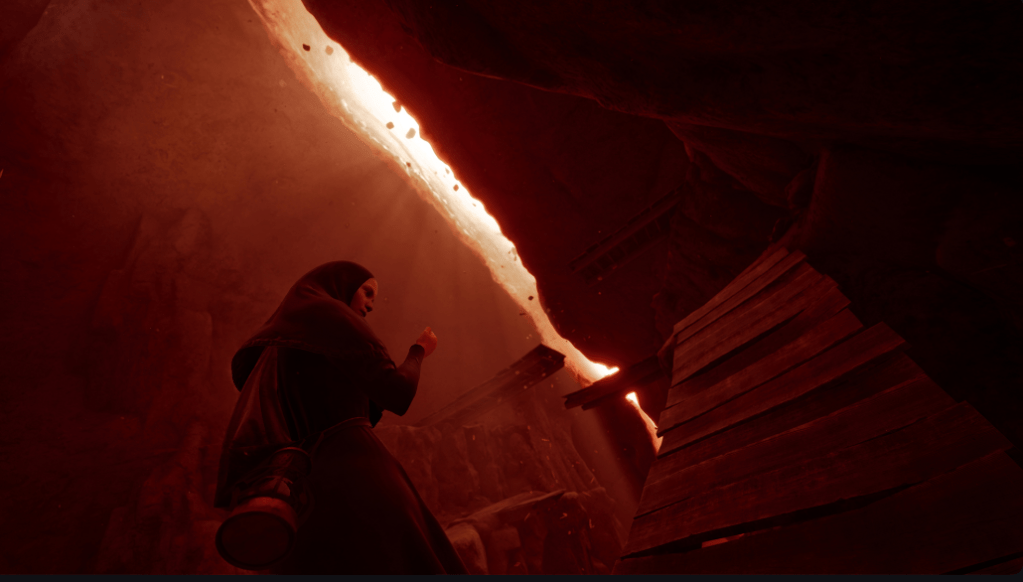
You play as Indika. A young nun living out a lonely and mundane existence, in a bleak 19th century Russian monastery.
As Indika is tasked with delivering a letter to another monastery, here beings her journey into a surreal, war-torn Russia with only the devil on her shoulder for company.
Seems simple enough.
A Journey Measured in Footsteps and 8-bit Flashbacks
Gameplay-wise, Indika keeps things simple. You walk, interact, solve light puzzles, and occasionally platform. There’s no combat, no skill tree, no crafting system. Forget swords and sorcery, Indika is a playable existential crisis wrapped in snow and self-doubt.

Movement is slow but deliberate, often sharing a ‘plodding along’ rhythm in its quieter moments like what you’d find in Until Dawn. That being said, if we are drawing comparisons then they pretty much end there. Both games diverge dramatically in tone, pacing and purpose. There are no jump-scares, branching choices or teen drama here.
Indika is more of a surreal philosophical novel, steeped in existential dread and my personal favourite, dry sarcasm.
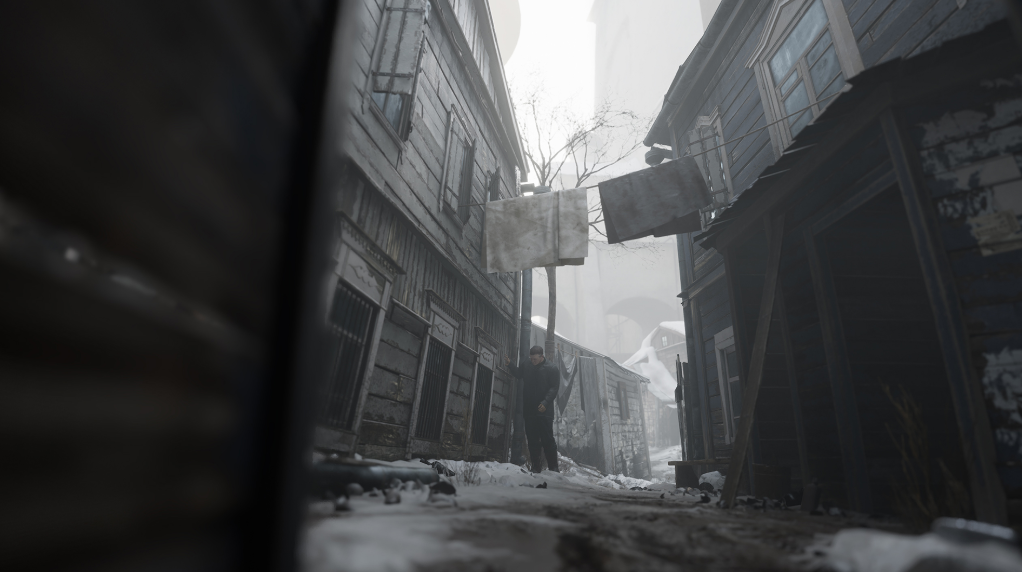
The landscape is cold and barren, yet architecturally beautiful in that distinctly Unreal Engine kind of way. The art direction is striking, bleak Russian architecture, decaying churches, and surreal dreamscapes rendered in muted palettes.
Crumbling monasteries, snow-laden forests, and desolate villages are rendered with cinematic precision.
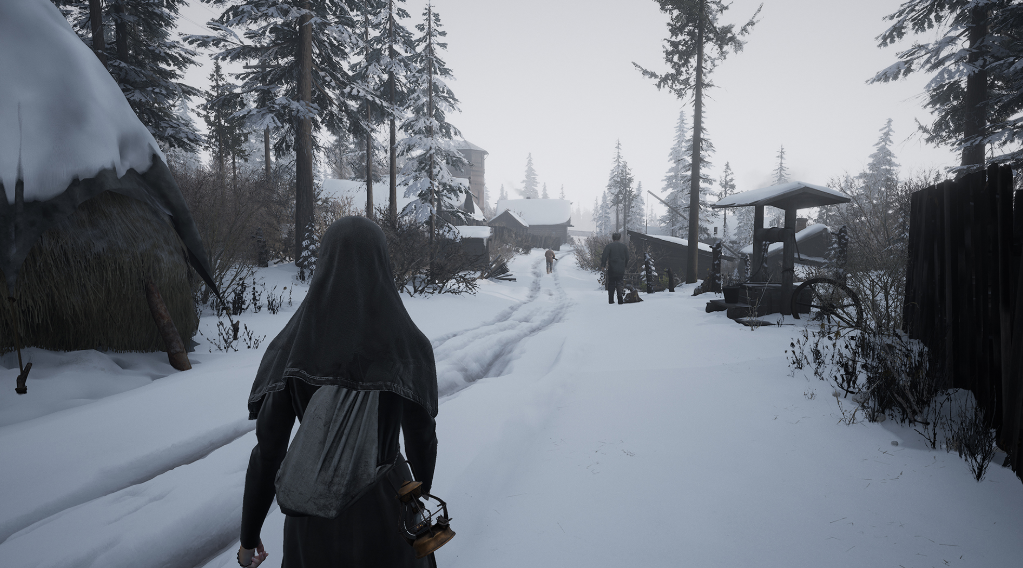
It’s a world that feels both grounded and surreal, where every frame could pass for concept art.
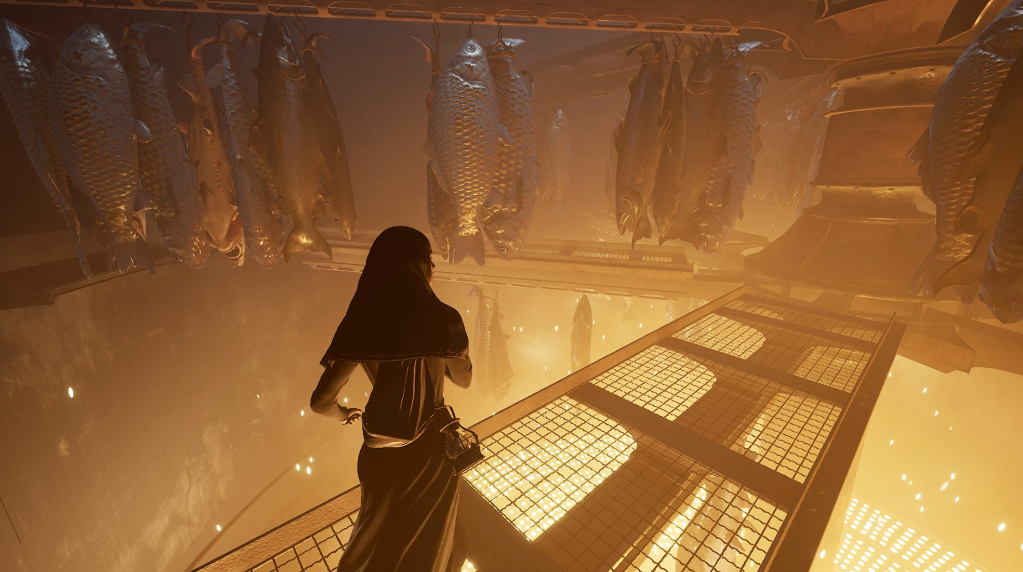
The environments are peppered with strange, almost poetic clutter. Tin cans stacked like offerings, fish hanging in places they shouldn’t be. These details aren’t explained, but they linger, adding to the sense that Indika’s world is stitched together from memory, metaphor, and quiet madness.
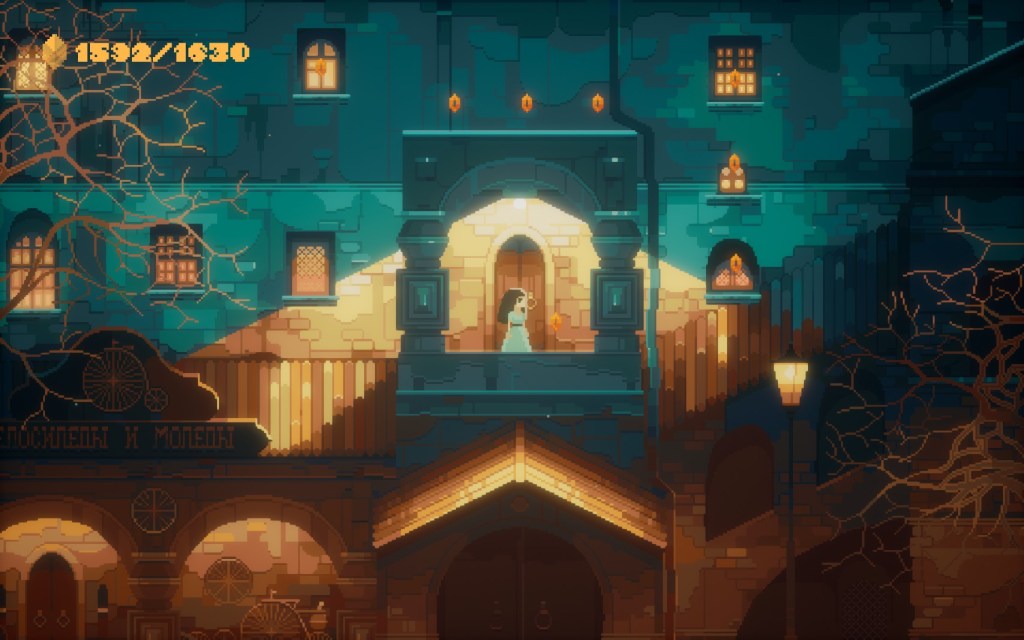
What truly sets Indika apart, though, is how it handles memory. Instead of traditional cinematic flashbacks, the game uses retro 8-bit mini-games to explore Indika’s past. These segments are a jarring contrast to the main game’s muted palette. Bright, pixelated, and deceptively playful. But beneath their nostalgic veneer lies something far darker. These flashbacks often reveal the most painful and repressed corners of Indika’s psyche. They’re brief, haunting, and sometimes, emotionally devastating. They really shouldn’t work. But they do.

Better the Devil you Know
But Indika isn’t just a solitary walk through snow and sorrow. From the very beginning, she’s joined by a voice. One that’s sardonic, sharp, and unmistakably demonic. The devil isn’t some distant antagonist lurking in the shadows; he’s right there in her head, narrating, needling, and nudging her toward uncomfortable truths.
Their dynamic is the beating heart of the game. He’s not just comic relief, he’s a philosophical sparring partner, a spiritual agitator, and occasionally, the only one who seems to understand her. As you trudge through crumbling monasteries and bureaucratic nightmares, it’s their banter that keeps the journey compelling.
Dark, bitterly funny, and often profound, the devil’s commentary turns Indika from a quiet pilgrimage into a full-blown existential debate.
The devil’s commentary is relentlessly sarcastic, and honestly, a little bit ‘me’. When Indika dies, whether by falling off a ledge or succumbing to some bureaucratic nightmare, he dryly mutters, “What a pity” in his sarcastic British accent. No dramatic music, no emotional swell. Just that. And as someone fluent in sarcasm myself, I’ve said those exact words in response to everything from spilled coffee to the feeling of existential dread when my laptop has run out of battery on a work trip and I’ve forgotten my charger. It’s moments like these that make the demon feel less like a tormentor and more like a darkly comic reflection of the player. He’s not just mocking Indika. He’s mocking the absurdity of it all.
A Convict, a Nun, and the Weight of Redemption
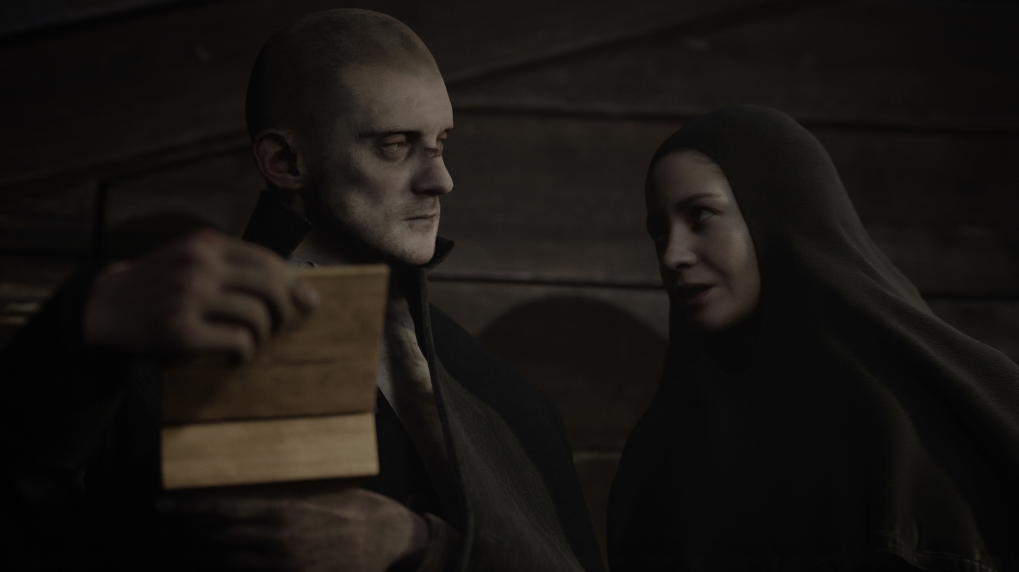
Early in her journey, Indika encounters a convict. Wounded, broken and seemingly beyond saving. But instead of turning away, she helps him. It’s a quiet act of defiance against the cold, institutional world she’s been raised in. Their relationship is brief but powerful, filled with awkward silences, small gestures, and a shared sense of not belonging.
The convict isn’t just a plot device. He’s a reflection of Indika herself: someone judged, confined, and searching for meaning in a world that offers little grace. Their interactions are some of the game’s most human moments, stripped of surrealism and sarcasm. Even the demon pipes down, as if recognizing the gravity of what’s unfolding.
Faith, Doubt, and Satire
At its core, Indika is a meditation on spiritual dissonance. It doesn’t mock religion, it interrogates it. The game explores how institutions can both comfort and corrupt, how belief can be both a refuge and a prison.
And yet, it’s funny. Darkly, bitterly funny. The demon’s commentary skewers everything from religious dogma to capitalist absurdity, making Indika feel like a playable philosophical essay wrapped in a surreal road trip.
Verdict
Indika isn’t for everyone. I’m not even sure it was for me. But I played it from start to finish with no desire to throw the towel in mid-way through so that must count for something right?
It’s slow, strange, and unapologetically cerebral. But for those willing to walk beside a conflicted nun and her sarcastic inner demon, Indika offers a pilgrimage unlike any other. It offers one of the most unique and thought-provoking experiences I’ve come across in a videogame. A beautifully bleak pilgrimage through faith, doubt, and the downright absurd.







 House of Solitude
Leave a comment