London isn’t short on cemeteries. With around 85,000 deaths recorded in the capital each year, we all have to end up somewhere. And yet, in a city founded nearly 2,000 years ago, burial space is running out.
Many of its cemeteries are now full, closed to new burials, or operating under strict limitations. Inner London boroughs like Islington and Westminster have no active cemeteries of their own, redirecting their former residents to final resting places in the outer boroughs.
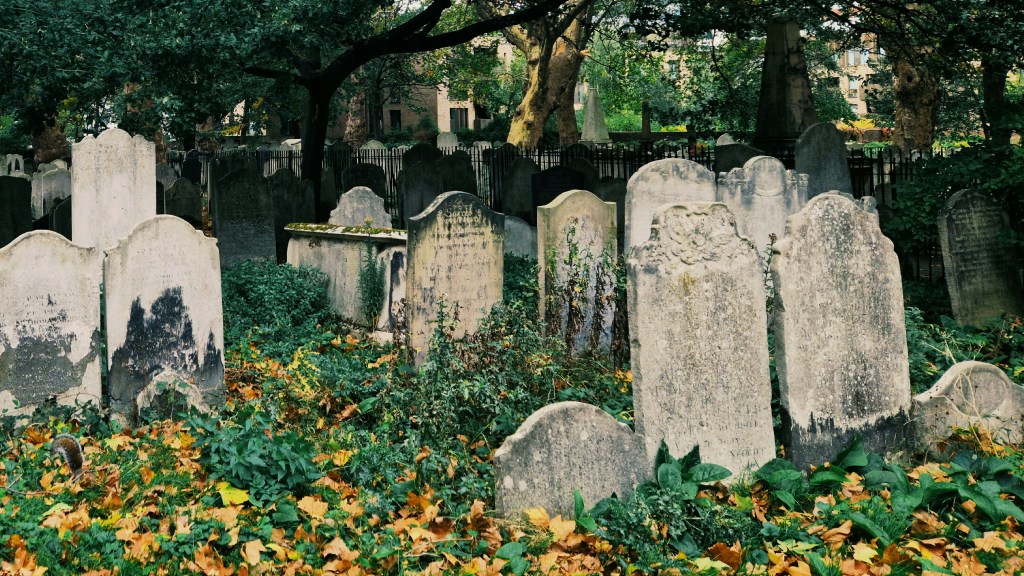
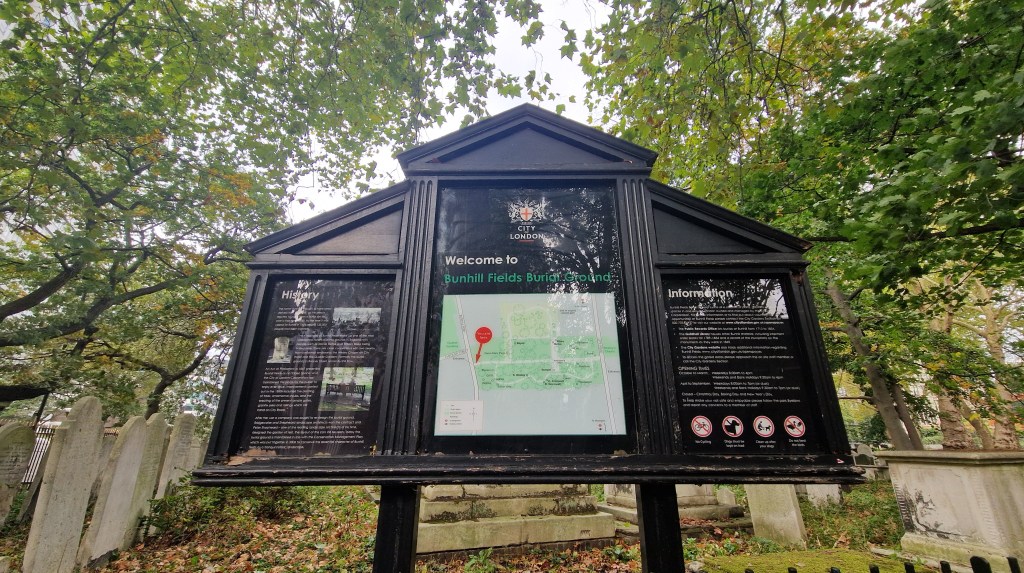
It’s in the borough of Islington where our story begins. Tucked between Old Street and Moorgate, just on the edge of the City of London. Like so many others, Bunhill Fields Burial Ground holds the dead, but no longer received them.
Origins: A Hill of Bones
In 1549, during the Reformation, the charnel house at St Paul’s Cathedral was demolished. For centuries, it had stored bones disturbed by burials or exhumations, a Catholic practice that had fallen out of favour. Over 1,000 cartloads of bones were removed and dumped just outside the City walls, where Bunhill Fields now stands.
The bones were piled into a mound and covered with a thin layer of soil. The result: a literal hill of bones. So high, in fact, that three windmills were built on top to take advantage of the elevation.
Imagine the sight. A mound of human remains, partially covered. Windmills turning above it. The city pressing in around it.
This wasn’t a cemetery yet. Just a mass relocation of the dead, and perhaps the moment when Bunhill, or Hill of Bones, acquired its name.
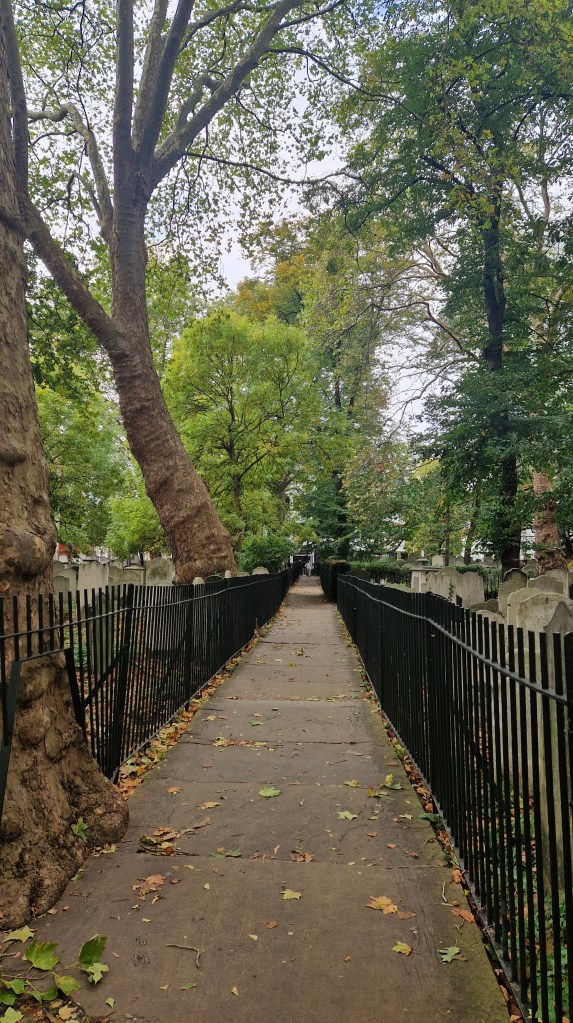
From Bone Hill to Burial Ground
Bunhill Fields was established as a burial ground in 1665, during the Great Plague and was in operation for 189 years before officially closing to new burials in 1854. Ironically, there’s no evidence plague victims were ever buried there.
The original hill was likely levelled or exhumed, but no records confirm what happened to the bones. They may still lie beneath the soil, layered beneath those who came later.
During that time, it became one of London’s more significant Nonconformist cemeteries, with over 120,000 burials. A final sanctuary for dissenters, radicals, and those excluded from the Church of England’s burial grounds including:
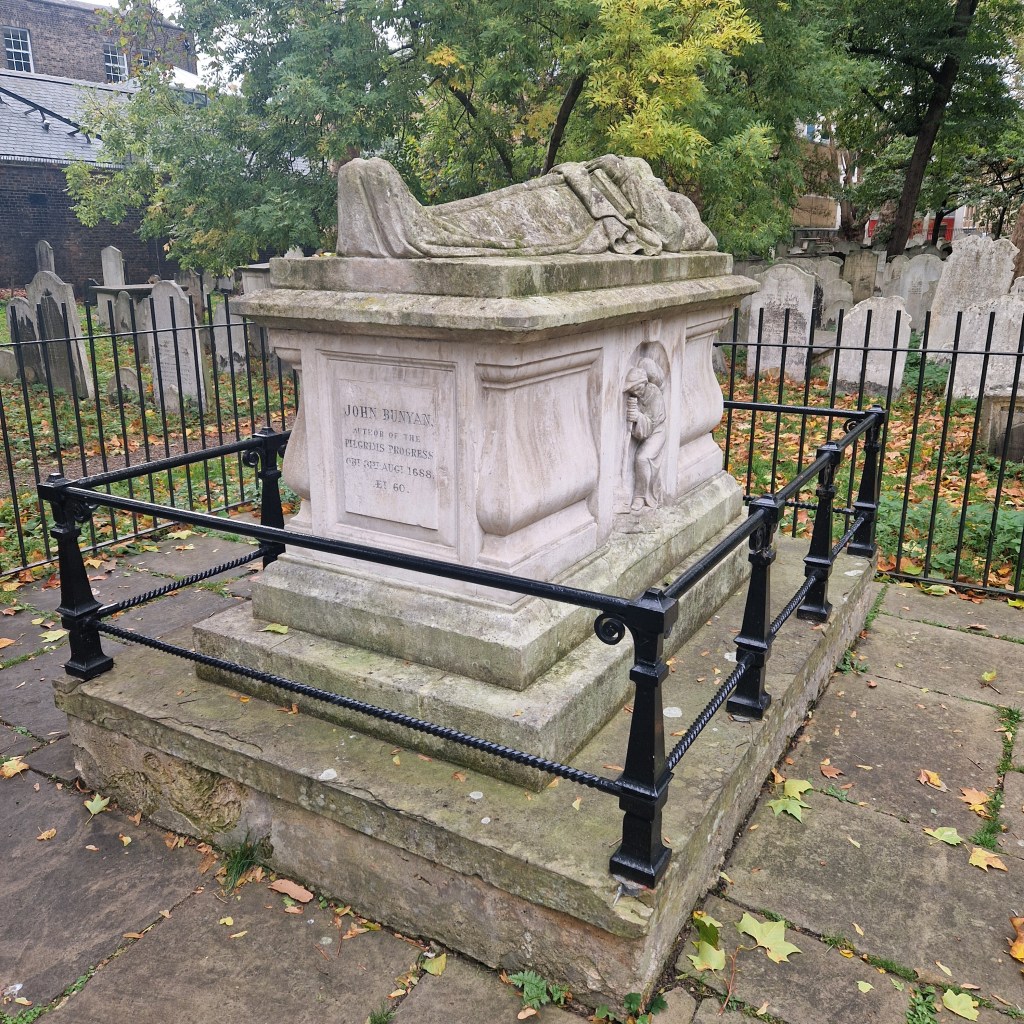
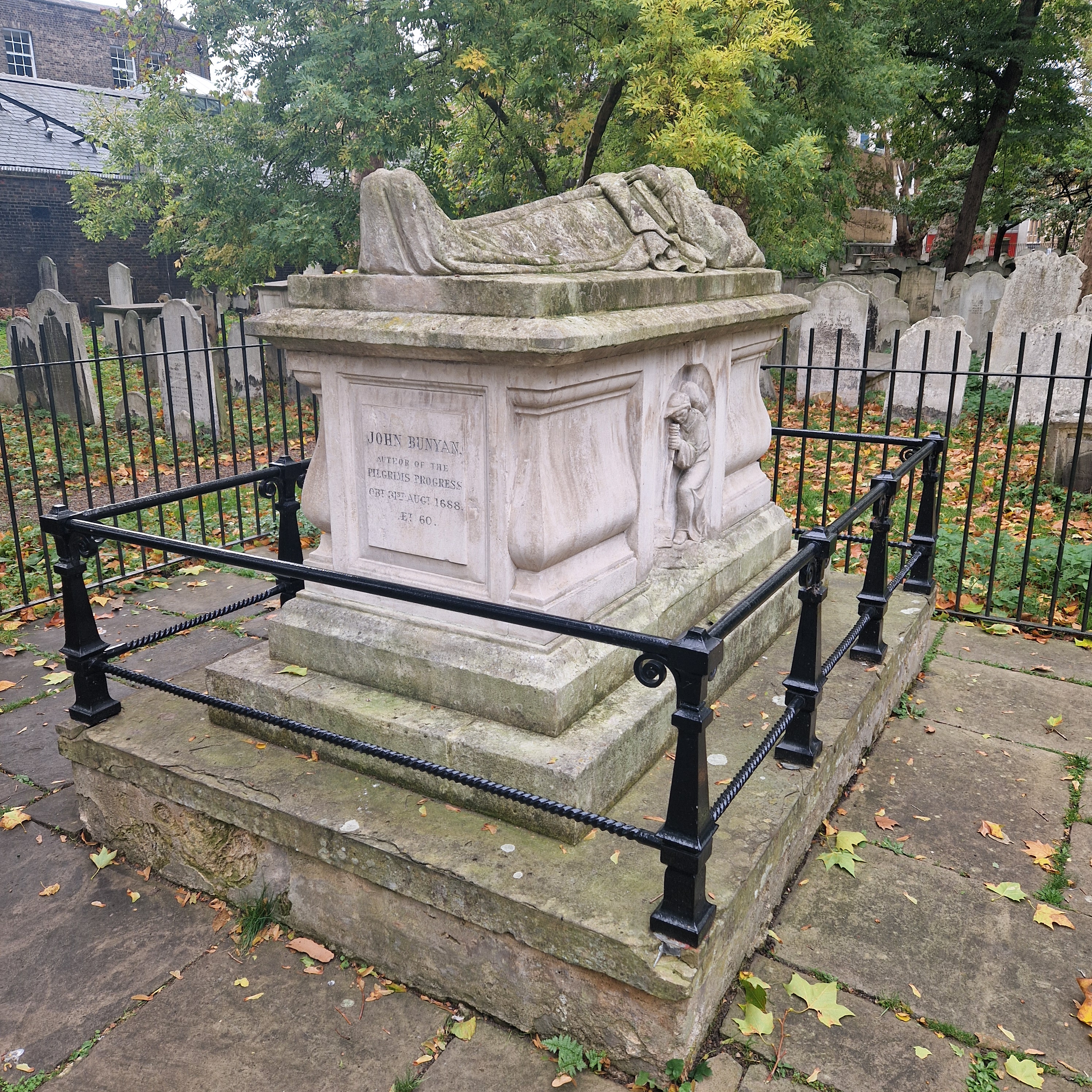
John Bunyan (1628–1688)
Born in Bedfordshire, Bunyan worked as a tinker (a mender of pots and pans) before experiencing a profound religious conversion. He became a Puritan preacher, refusing to conform to the Church of England. For this, he was imprisoned for 12 years during which time he wrote The Pilgrim’s Progress, one of the most widely read books in English literature.
Daniel Defoe (c. 1660–1731)
A journalist, spy, political dissenter, and the author of Robinson Crusoe, often considered the first English novel. A fictional autobiography of a castaway surviving 28 years on a remote island. It explores themes of isolation, colonialism, and spiritual redemption.
Born in London, Defoe lived through plague, fire, and rebellion. Like all in Bunhill Fields, he was a Nonconformist, refusing to join the Church of England, which shaped both his politics and his writing.
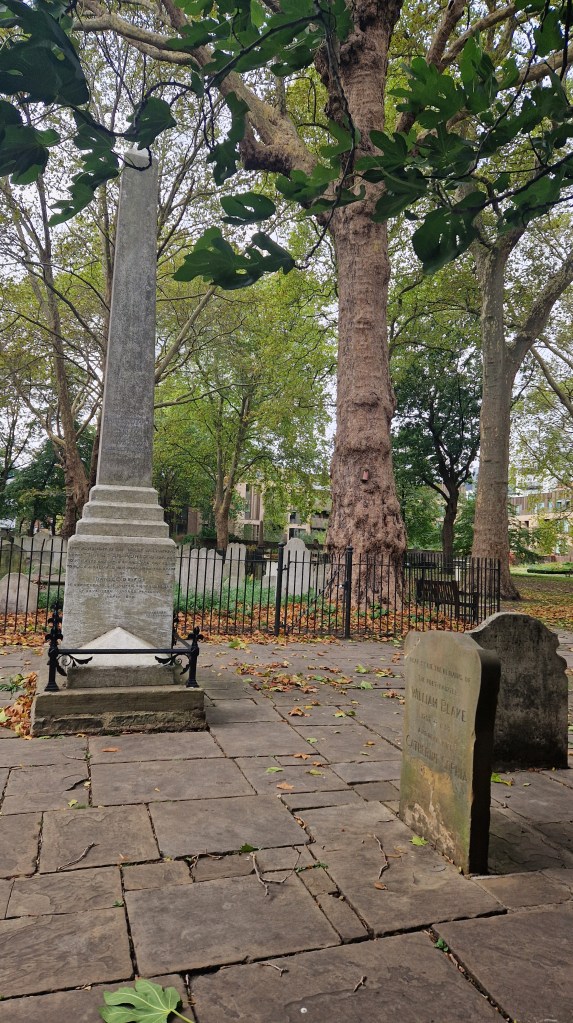
William Blake (1757–1827)
A poet, painter, and printmaker born in Soho, London.
Blake claimed to see visions from childhood. Angels in trees, prophets on the streets. His work fused mysticism, politics, and art, often challenging religious orthodoxy and social injustice. He wrote many poems, including ‘Jerusalem’ which was later set to music and is one of Britain’s most iconic hymns.
As a nonconformist, both spiritually and socially, Bunhill Fields makes a fitting resting place.
Isaac Watts (1674–1748)
Born in Southampton, Watts was a child prodigy, writing poetry in Latin by age seven. As a Nonconformist, he couldn’t attend Oxford or Cambridge, so he studied at a dissenting academy in Stoke Newington. He became a Congregational minister, but poor health kept him from preaching regularly.
Watts wrote over 750 hymns, many still sung today including Joy to the World, What I survey the Wondrous Cross, and Our God, Our Help in Ages Past.
His hymns broke from tradition. Moving beyond strict psalm translations to personal, poetic expressions of faith. He also wrote on logic, philosophy, and education, influencing generations of thinkers.
George Fox (1624–1691)
The founder of the Religious Society of Friends, better known as the Quakers, a movement rooted in radical simplicity, spiritual equality, and quiet resistance.
Born in Leicestershire, Fox was a shoemaker’s son who rejected the formalism of the Church of England. In his early twenties, he experienced a series of spiritual revelations, believing that true faith came from an inner light, a direct, personal connection to God. He began preaching across England, often outdoors, often arrested, and always uncompromising.
Fox believed that everyone could access the divine without priests, churches, or sacraments. He also believed that women and men were spiritually equal, a radical stance in the 17th century.
Fox died in 1691 and was buried in Bunhill Fields, among fellow Nonconformists. His grave is part of the central memorial cluster, though like many, it’s been weathered by time.
His legacy lives on in Quaker communities worldwide, known for activism, pacifism, and quiet resistance.
Susannah Wesley (1669–1742)
The quiet architect behind one of the most influential spiritual movements in British history. Not through sermons or books, but through motherhood, discipline, and radical domestic theology.
Born in London, she was the 25th child of a Nonconformist minister. Married Samuel Wesley, an Anglican clergyman, they had 19 children, although only 10 survived infancy.
Wesley lived much of her life in Epworth, Lincolnshire, often in poverty and isolation but ran her household like a school, teaching her children Latin, Greek, theology, and moral philosophy. She held Sunday evening services in her kitchen while her husband was away, drawing crowds of over 200, a quiet act of spiritual leadership.
Her letters and teachings deeply shaped her sons John and Charles Wesley, who went on to found Methodism.
Reclaimed by Nature
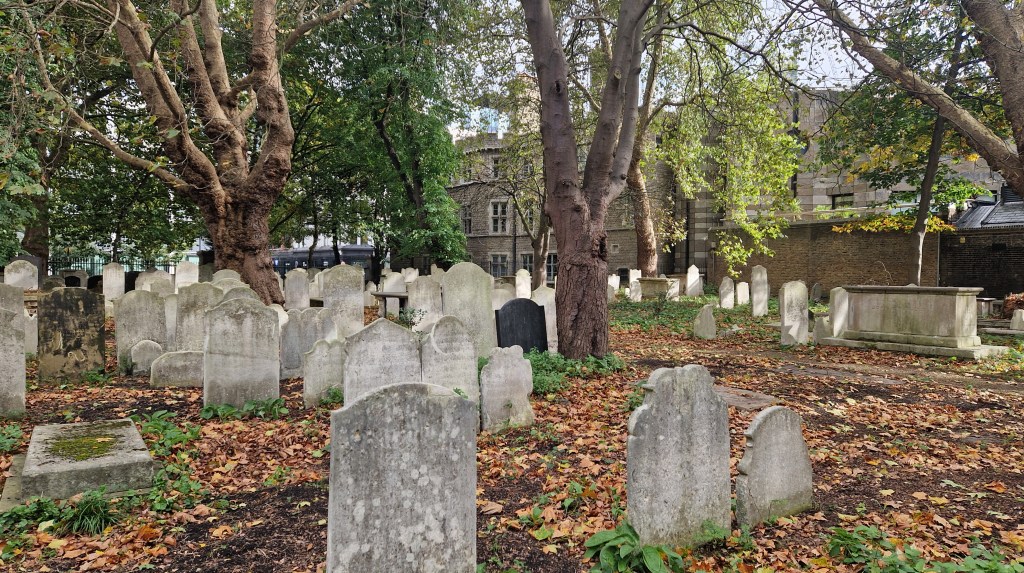
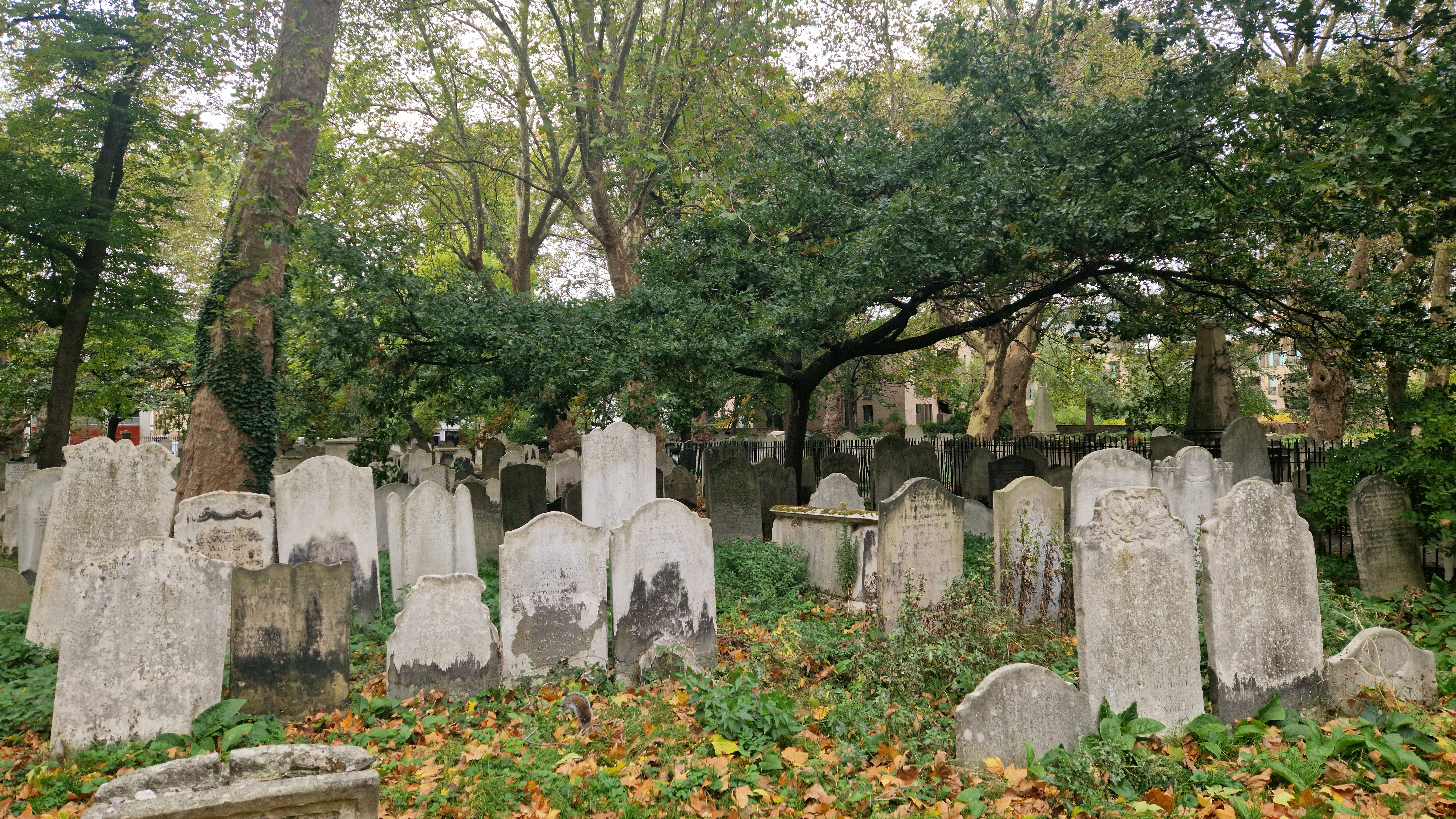
Bunhill Fields officially closed to new burials in 1854, as London’s burial crisis deepened. In 1868, it was partially converted into a public garden, with paths laid and some areas landscaped.
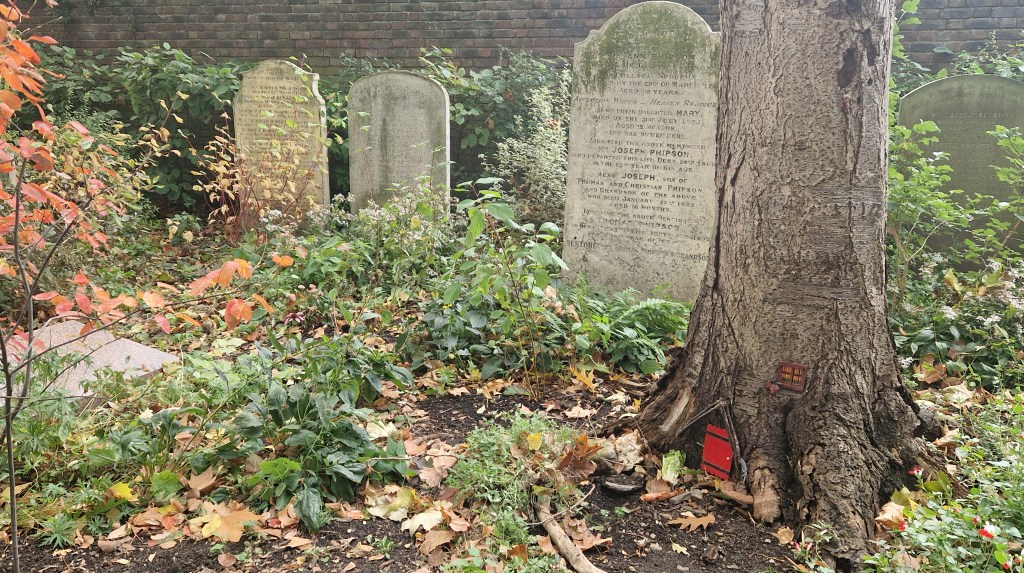
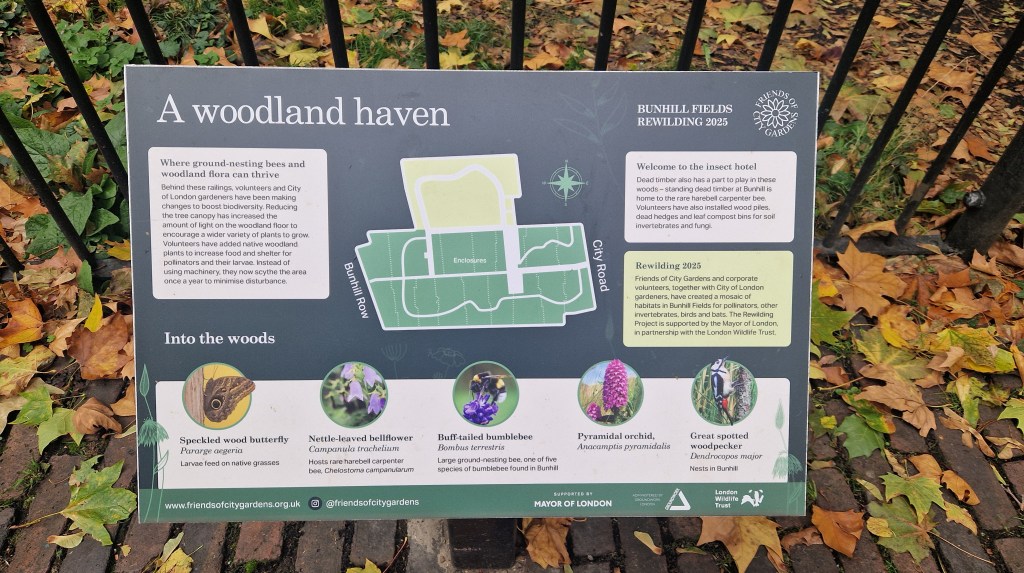
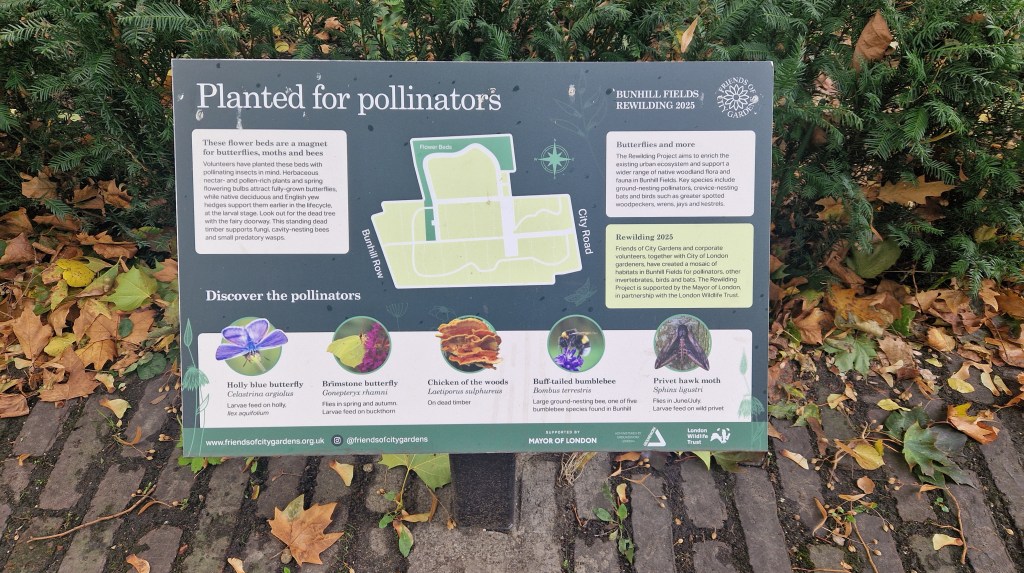
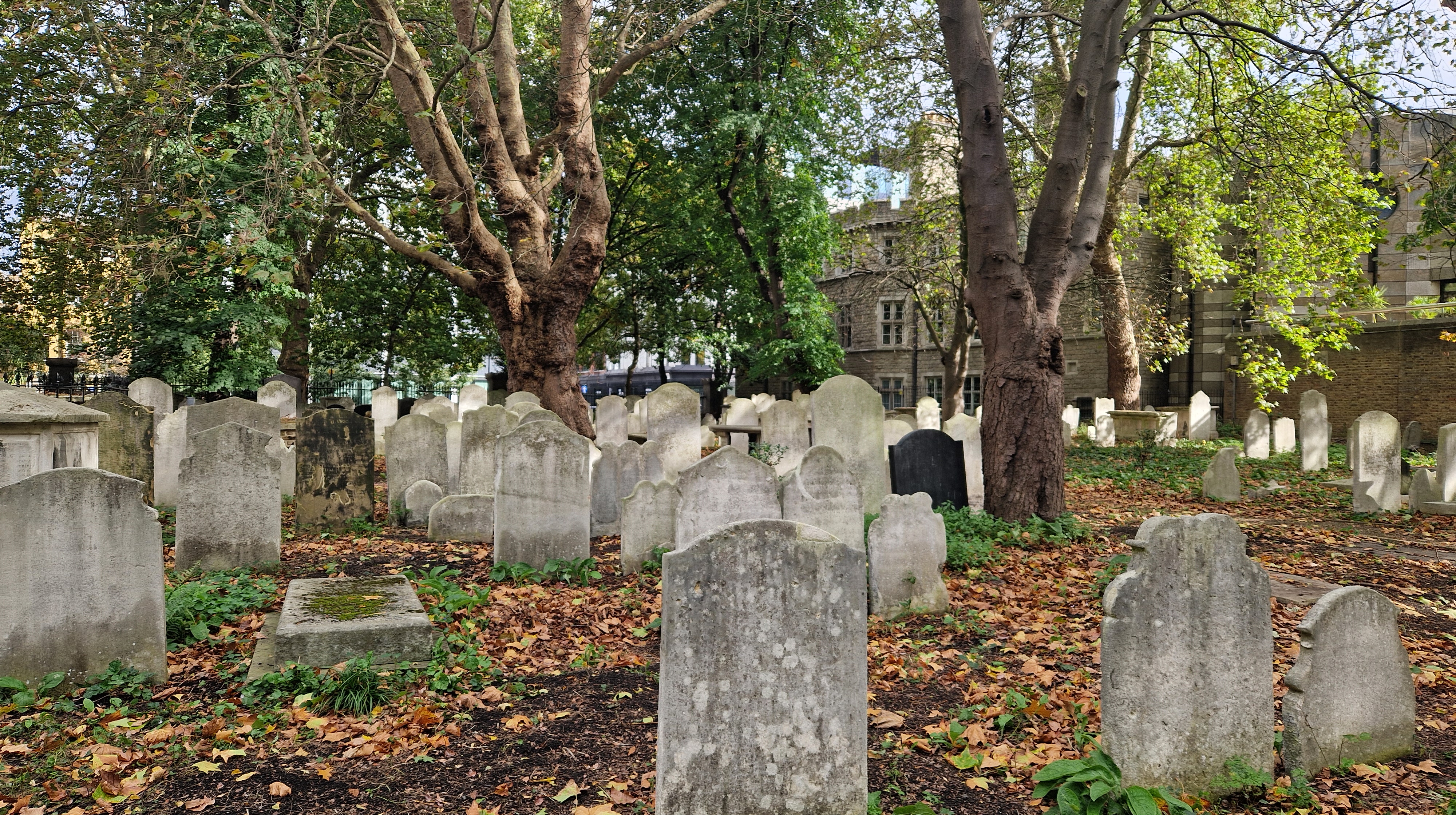
Today, it’s a Grade I listed site, protected for its historical and cultural significance. It’s also a nature conservation area, home to wildflowers, bees, foxes, and quiet walkers. It’s a quietly thriving wildlife garden and a Site of Borough Importance for Nature Conservation.
Final Thoughts
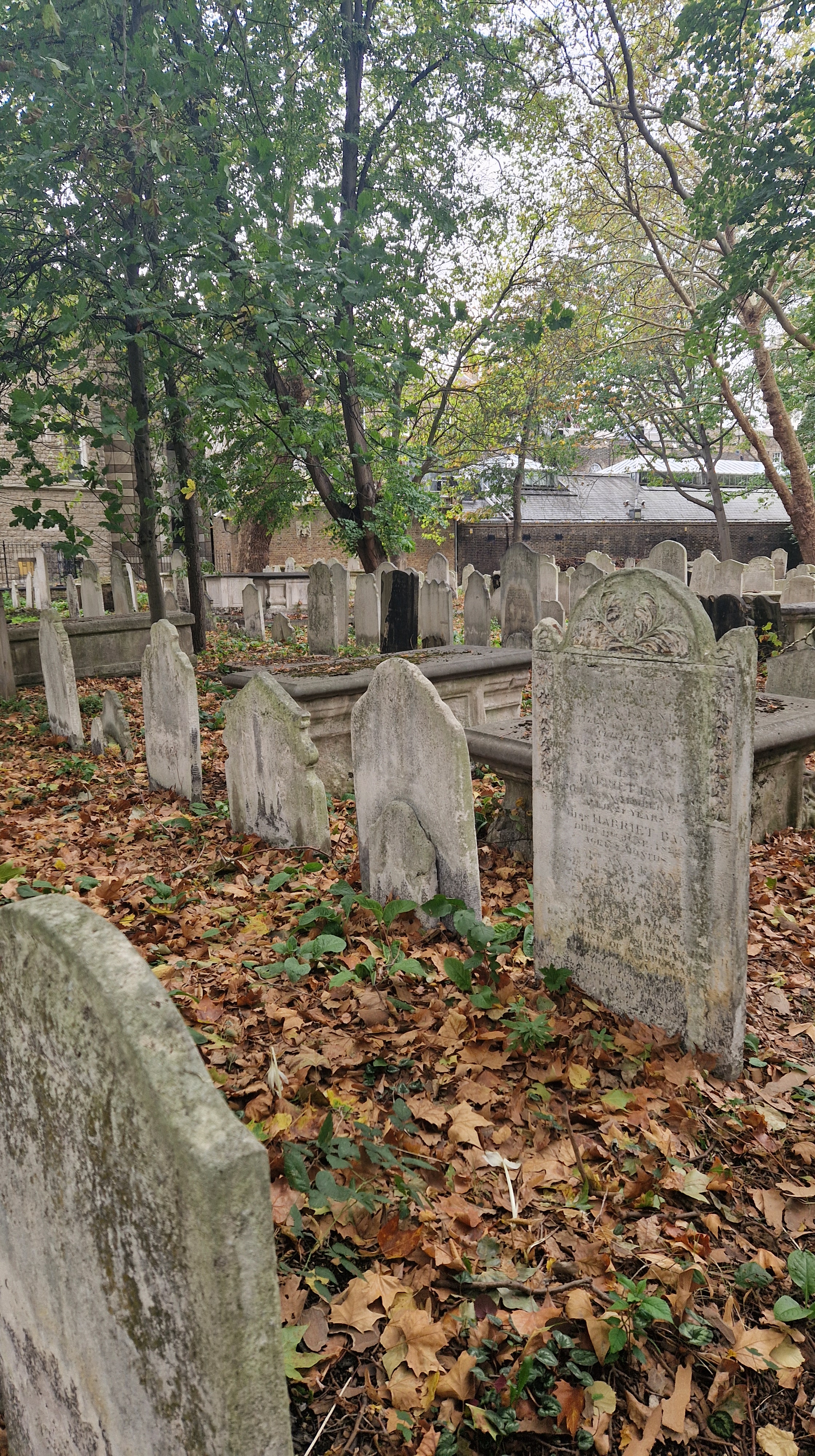
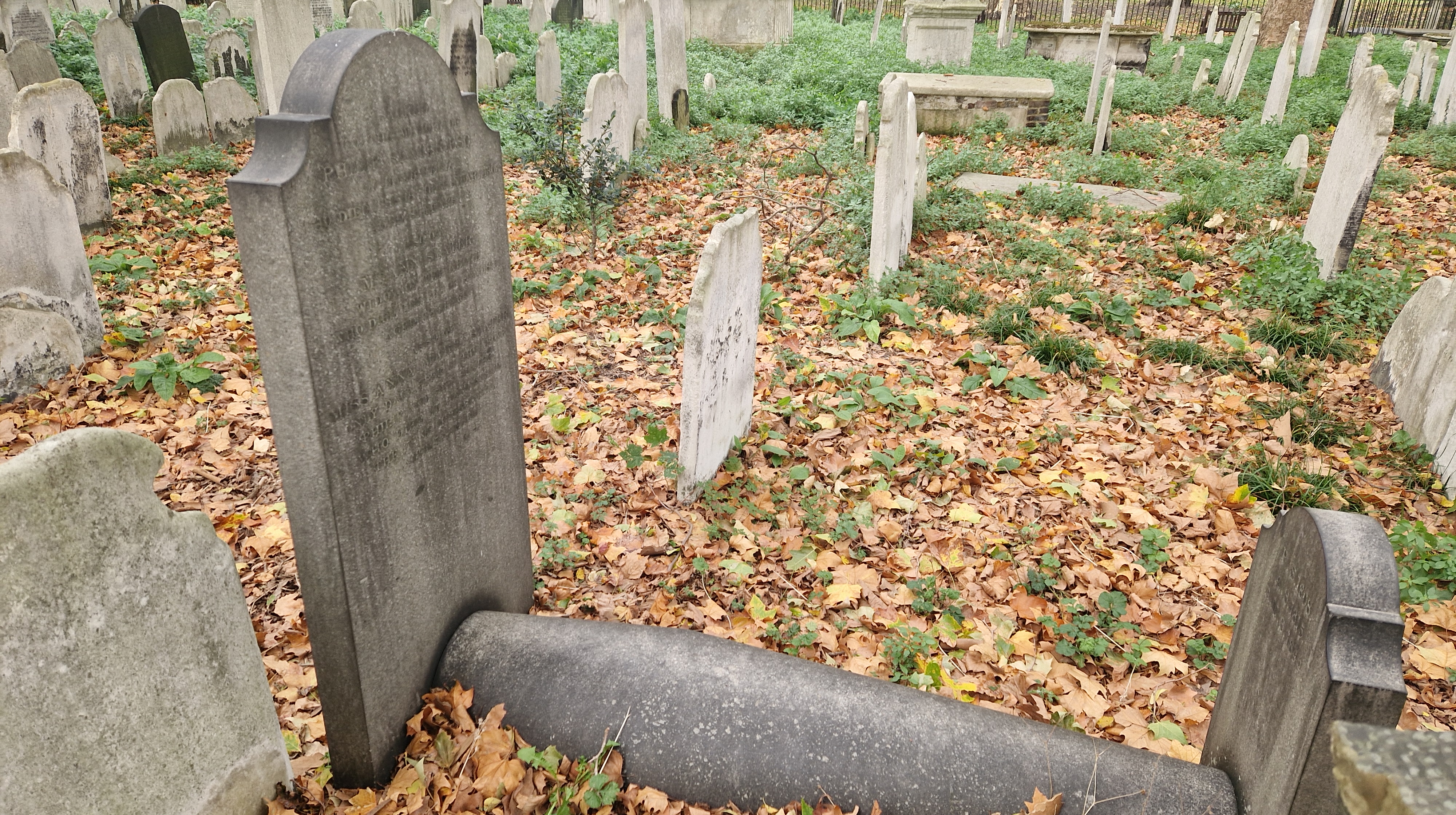
There’s no record of who was buried in the original mound. Many graves were never marked with individual stones and many of those which were, have eroded of sunk beyond recognition over 300 years. As many of those laid to rest in Bunhill were Nonconformists, their stories weren’t always preserved.
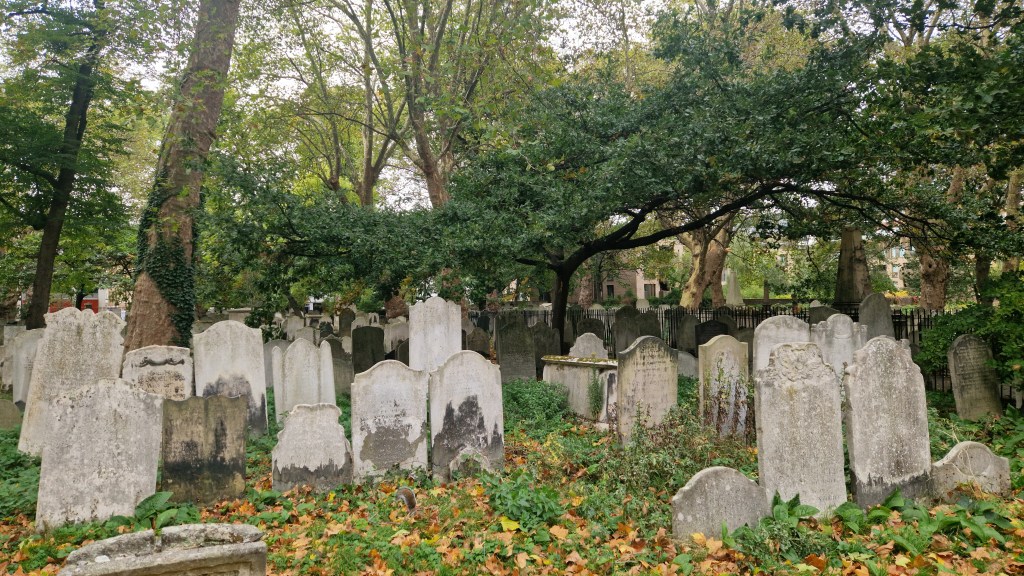
Decedents today walking past the cemetery may be blissfully unaware that their ancestors lie within. There’s something haunting in that. The idea that someone’s great-great-great-grandmother might be buried beneath a stone so worn it’s become anonymous. That the foxes and bees know more of her presence than her own bloodline who sit above her, unknowing – eating lunch, checking phones and waiting for their next meeting.





 House of Solitude
Leave a comment