
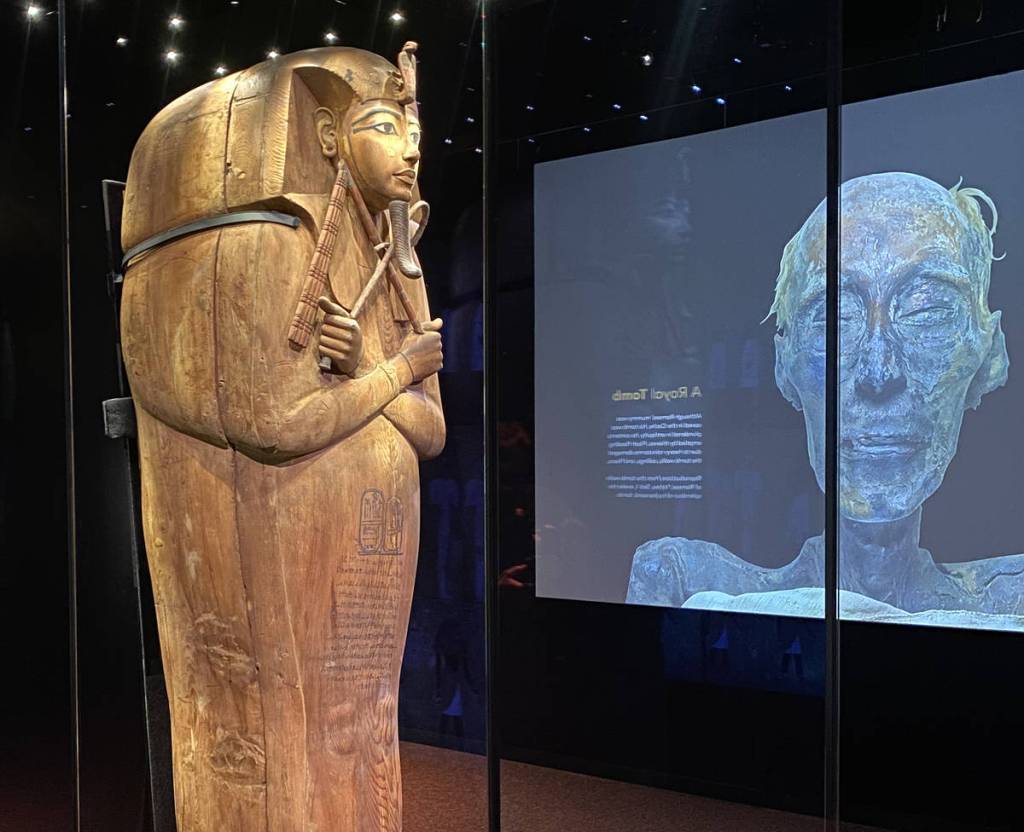
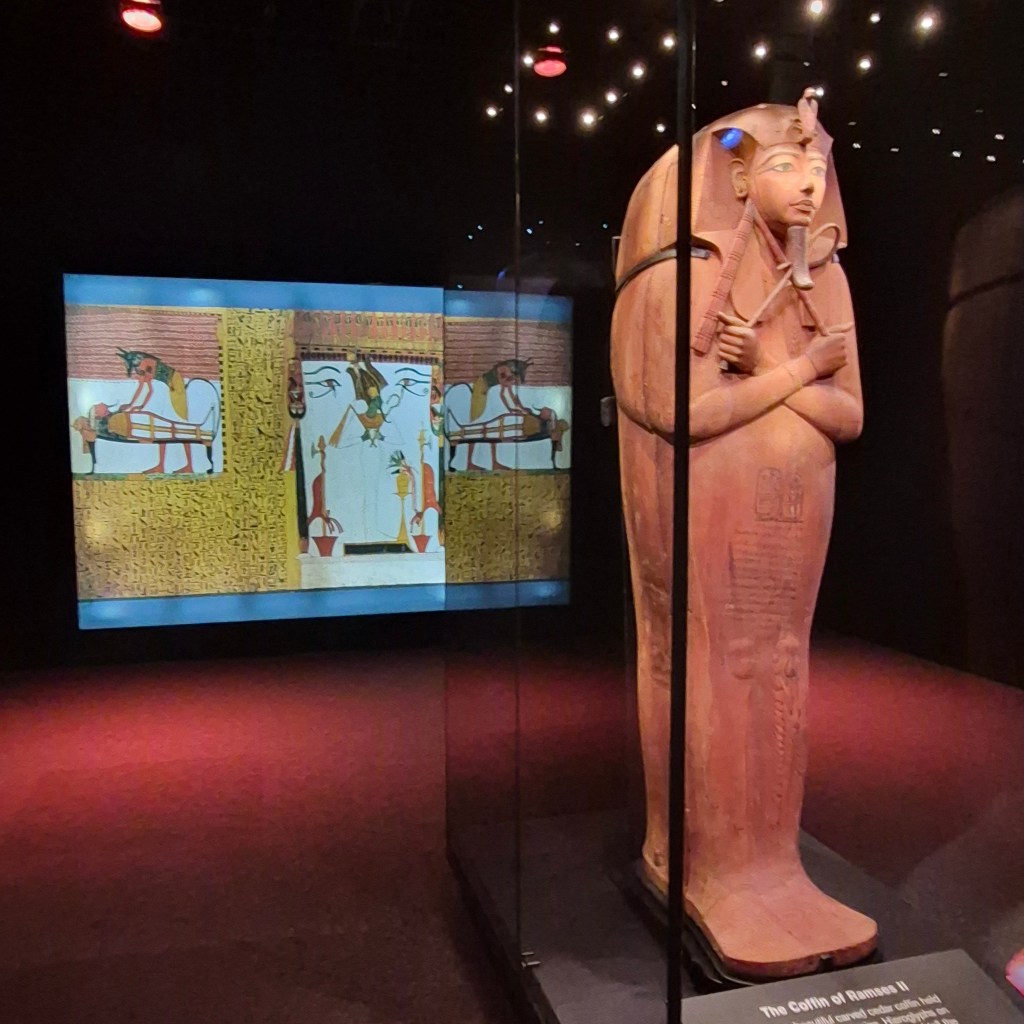
Ramses II is in Battersea at the moment (well, his coffin is – the man himself apparently had better things to do). Whilst his body remains in Cairo’s Egyptian Museum, the sarcophagus that once promised eternal protection has now been whisked out of the Egyptian desert and plonked down in South West London, under the shadow of a re‑imagined power station and surrounded by gift shops and coffee queues. Truly, the afterlife we’re sure he’d always dreamed of.
Ramses and the Pharaohs’ Gold bills itself as a major international showcase of more than 180 artefacts linked to Ramses II and Egypt’s royal burials, including his cedar coffin. Part of a multi‑year world tour, it has already passed through Cologne and Tokyo, where half a million people queued to peer at the spoils of ancient royalty before arriving in London, where it will remain until August 2026.
It’s almost a shame his body didn’t come too. Normally we’d object to resurrecting the dead for public entertainment, but given he’s already been disturbed several times over the last three millennia, they could have at least given the man a proper holiday. A quick city break. A Pret sandwich. Something.
So who was Ramses II?
Only one of the most powerful rulers in ancient history. A man who reigned for nearly 67 years, built monuments the size of small towns, negotiated peace treaties, waged wars, and fathered enough children to populate a mid‑sized London borough. Truly the original overachiever.
The exhibition frames him as a visionary of empire, architecture, diplomacy, and legacy. Which is fair. Ramses didn’t just want to rule Egypt; he wanted to make absolutely sure we’d still be talking about him three millennia later. And, inconveniently for him, we are. Though probably not in the setting he imagined.
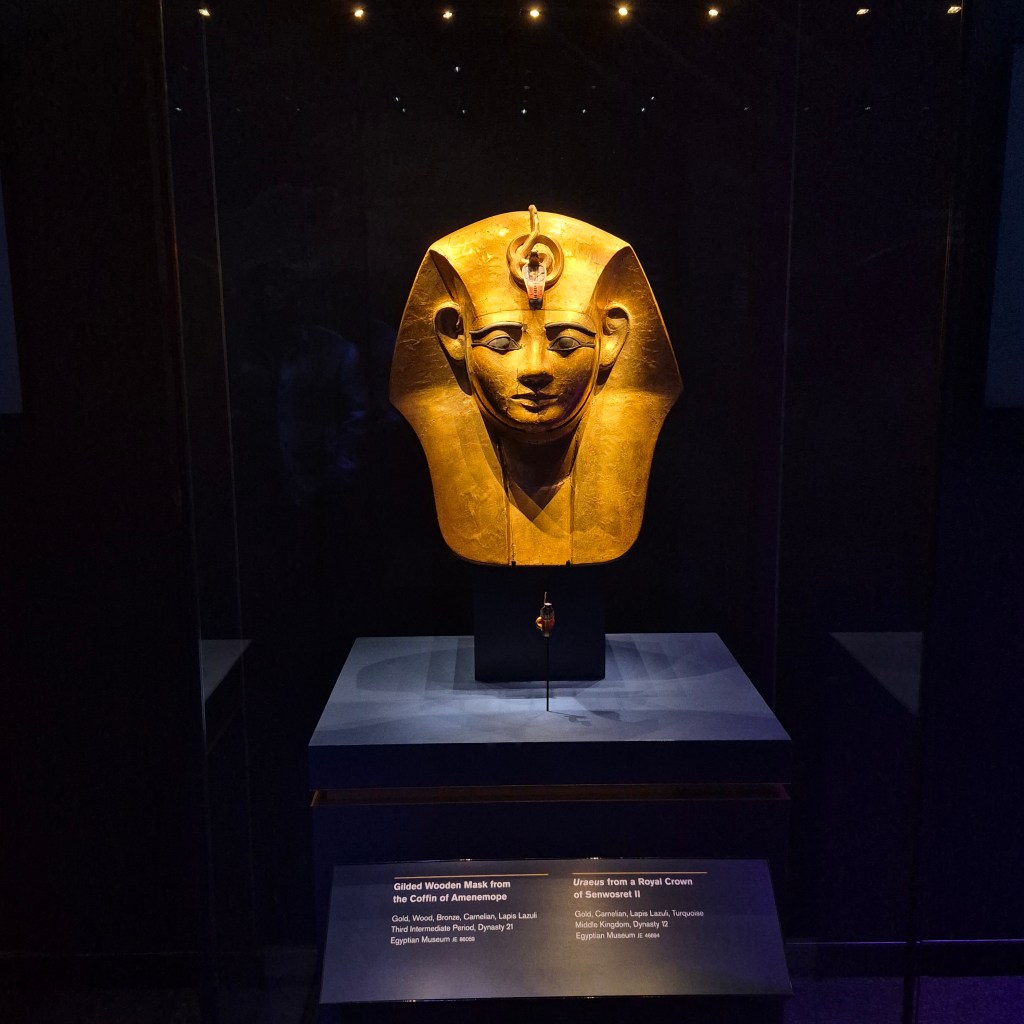
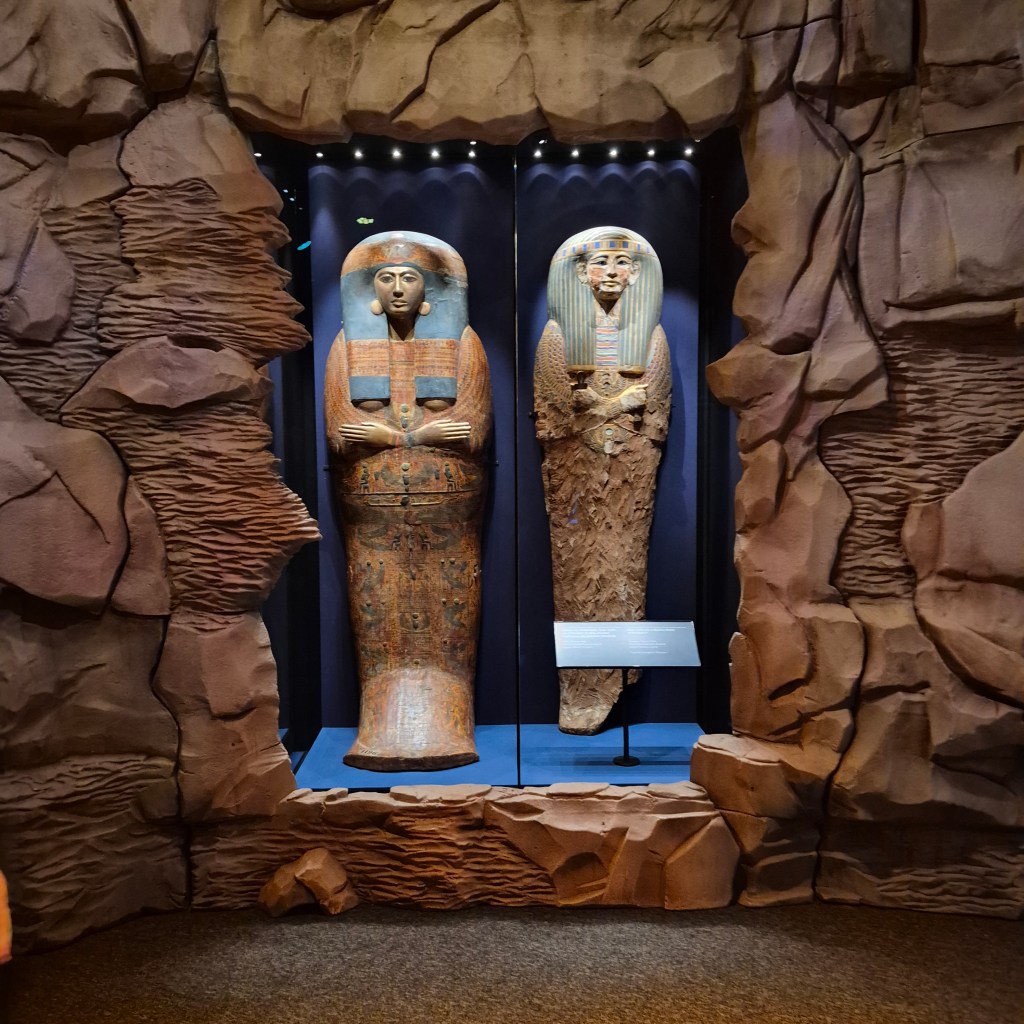
Exhibition Overview
Most of the objects on display were never meant to be seen again. They were carved, wrapped, painted, and sealed away with the confidence of someone who believed eternity was a private affair. A quiet contract between a person and the afterlife: Do not disturb.
And yet here they are, halfway across the world, arranged under gallery lighting and politely queued for by people holding iced lattes. Their purpose rewritten by time, tourism, and archaeology’s relentless appetite for “just one more look.”
We call it preservation. We call it education. But sometimes, standing in front of these objects, it feels less like reverence and more like we’ve knocked on the door of eternity and let ourselves in without waiting.
There’s beauty in seeing them, of course. Awe, even. But there’s also a quiet question humming beneath the surface: what does it mean to take something crafted for eternity and place it under gallery lights for the living to shuffle past between coffee breaks?
The exhibition even includes a VR reconstruction of his world. A digital resurrection of chambers that were meant to be sealed forever. Ramses II spent his life preparing for the afterlife, and now strangers in jeans and hoodies wander through it wearing headsets, occasionally bumping into the virtual walls of his eternal home. We can’t help wondering what he’d make of the whole thing. Absolutely horrified, perhaps, that his carefully curated eternity has become an interactive experience. Or maybe secretly impressed that his name still echoes loudly enough to be rebuilt out of pixels and motion sensors.
The Pharaohs wanted immortality. We’re just not entirely convinced this is the version they had in mind.
Final Thoughts
Tourists flock to Egypt every year. They visit the pyramids (how could they not?) But, many find themselves hesitating at the threshold of the inner chambers. The tombs were looted millennia ago. The bodies are long gone. What remains is stone, air, and the echo of intentions laid down thousands of years before any of us existed. And yet, the idea of stepping into those narrow passages can feel strangely intrusive, as if the living are trespassing in a place that was never meant to hear their footsteps.
Maybe that’s what lingers most. The sense that these spaces and objects were curated for silence, for darkness, for a world that didn’t include us. And now they live a second life in Battersea, watched by thousands, their stories retold in ways they never asked for.
There isn’t really an answer. Only the soft, persistent feeling that some objects carry a weight that isn’t entirely ours to hold, and yet we keep holding them anyway.
Practical Details
Ramses and the Pharaohs’ Gold is currently on display at NEON, Battersea Power Station, where it will remain until August 2026. The exhibition includes more than 180 artefacts, Ramses II’s cedar coffin, and an optional VR experience that reconstructs parts of his world.
Tickets: You can book timed entry slots through the official exhibition page: https://ramsesbattersea.com



Leave a Reply